
by WorldTribune Staff, December 8, 2025 Real World News
The Republican-led House on Monday passed two bills aimed at increasing protections for taxpayers in matters related to penalties imposed by the IRS and tax dispute proceedings in the U.S. Tax Court.
HR 5346, the Fair and Accountable IRS Reviews Act, relates to supervisory approval for certain federal penalties imposed by IRS agents on taxpayers.
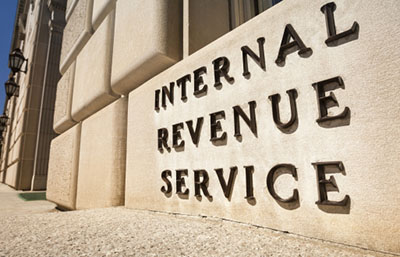 Currently, IRS employees can impose fines on taxpayers after gaining written authorization from their immediate supervisor.
Under present regulations, an immediate supervisor is broadly defined as an individual tasked with reviewing another employee’s proposed penalties, and not necessarily the supervisor to whom the IRS employee reports, according to a fact sheet from the House Committee on Ways and Means.
IRS agents can thus “shop around for sympathetic supervisors,” the committee said, which weakens taxpayer protections.
“This circular definition is so broad that IRS agents can obtain approval to apply tax penalties on taxpayers from virtually any other employee,” the fact sheet states.
The bill seeks to resolve the issue by defining an immediate supervisor “to be the person to whom the individual making the determination reports,” the fact sheet said.
In addition, the bill clarifies that supervisory approval of a penalty will only be considered timely if such approval is obtained in writing before a taxpayer is notified of such a penalty.
In a Dec. 3 statement, the House Ways and Means Committee said the bill will ensure that “rogue IRS agents are not levying fines and penalties on taxpayers without specific supervisory approval.”
The second bill, HR 5349, the Tax Court Improvement Act, seeks to expand the authority of the U.S. Tax Court in issuing subpoenas. The court will be authorized to extend certain petition deadlines and also institute other changes to court procedures.
The U.S. Tax Court is a federal trial court specializing in adjudicating disputes related to federal income tax, a process that typically takes place before formal tax assessments are conducted by the IRS, according to a fact sheet from the Ways and Means Committee.
The Tax Court is the only forum in the United States where taxpayers can litigate issues without having to first pay in full the taxes that are being disputed.
The bill aims to solve inefficiencies in the Tax Court structure, the committee said.
The bill will also hold Tax Court judges to the same standards for disqualification that apply to other federal judges.
Other provisions of the bill include expanding the type of proceedings for which special trial judges may be appointed, authorizing special trial judges to impose a jail term of up to 30 days and a maximum fine of $5,000 for contempt of court, and requiring judges to recuse themselves in certain circumstances.
Both bills have been sent to the Senate.
Support Free Press Foundation

House passes bill to strengthen taxpayer protection against IRS fines added by Editor Two on
View all posts by Editor Two →