
by WorldTribune Staff, December 28, 2025 Real World News
The Pentagon is investing heavily in a new Tennessee smelting facility that the Trump Administration hopes will reduce the U.S.’s reliance on China for critical minerals.
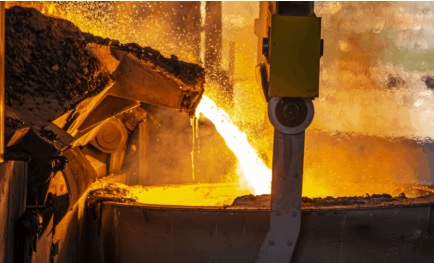 The Department of War is taking a 40% stake in the $7.4 billion mineral smelter to be built in partnership with Korea Zinc, Reuters reported.
The critical minerals smelting and processing facility could produce 540,000 tons of materials per year, according to the U.S. Commerce Department.
“These minerals power the technologies that matter most for our future: defense systems, semiconductors, AI, quantum computing, autos, data centers, and advanced manufacturing,” the Commerce Department said in a post on X.
The deal comes as the U.S. seeks to form critical mineral partnerships that are not dependent on China.
“The United States hasn’t built a large-scale zinc smelter like this since the 1970s — a fact that reflects how decades of poor leadership imperiled our national and economic security,” White House spokesman Kush Desai said in a statement to CNBC.
“Thanks to President Trump, that’s now changing with Korea Zinc’s … investment in Tennessee,” Desai said. “The Trump Administration will continue to leverage every tool at our disposal to end America’s foreign dependence for critical minerals and restore working-class prosperity.”
The Commerce Department said that in addition to the smelter, the U.S. would have priority access to Korea Zinc’s global production.
The Korea Zinc deal follows an $8.5 billion “framework” agreement between the U.S. and Australia in October to increase rare earth and critical mineral investment between the two countries.
As part of the agreement with Australia, the Pentagon agreed to invest in building a gallium refinery in western Australia, the White House said at the time.
The Pentagon in July became the largest shareholder in the rare earth miner MP Materials after agreeing to buy $400 million of its preferred stock.
Support Free Press Foundation

Tennessee smelting facility to reduce U.S. critical mineral dependency on China added by Editor Two on
View all posts by Editor Two →