
by WorldTribune Staff, July 13, 2026 Non-AI Real World News
President Donald Trump’s pressure on European and other allies is compelling them to cease relying on American security, fostering greater self-reliance and the development of independent defense capabilities, Victor Davis Hanson contends.
This shift, characterized as “tough medicine,” aims to transform allies into stronger, more equal partners by forcing them to manage their own defense and economic burdens, Hanson told Just the News.
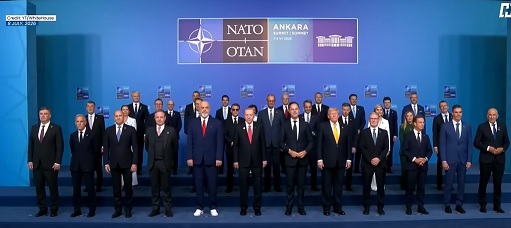
In many media reports ahead of last week’s NATO summit in Turkey, European leaders’ frustrations with their American counterpart was the key story.
The Wall Street Journal reported extensively on the breach between Washington and its allies over Trump’s threats to seize Greenland, boost defense spending, and questioning the U.S. commitment to the alliance.
Hanson, a senior fellow at the Hoover Institution at Stanford University, noted that the actions of those European allies show Trump’s pressure is working, despite their protestations and suggestions that they have reached a breaking point with the U.S.
Since Trump took office last year and called for Europeans to boost the percentage of GDP spent on defense, the NATO allies have responded with action. At a summit last year, the allies committed to boosting defense spending to 5% of GDP.
“Europe is very upset with Trump, but it’s largely because he’s forcing them to do what they know is in their own self-interest, and they can’t admit that they were wrong by not arming to the 2% prior NATO standard or reaching the 5%,” Hanson told the John Solomon Reports podcast.
“But, the net result of it is that in a year or two, NATO is going to be much more independent, much better to protect itself from Russia, and will allow us to pivot and really take care of our equally important allies in Australia, the Philippines, Japan, South Korea, and Taiwan against the rising hegemony of China.”
Trump at the NATO summit acknowledged the progress in meeting the spending goal many members have made.
“In the working session this morning, we discussed the progress other members are making toward the 5% target,” Trump said. “Some have truly answered the call and others are making big changes, and will be answering the call. … I urge all nations to accelerate their plans to get to the benchmark as quickly as possible.”
Germany, whose military strength has lagged behind its position as the continent’s dominant economy since the end of the Cold War, is leading the pack. Last week, German Chancellor Friedrich Merz’s cabinet approved a draft budget that would allocate one fifth of federal expenditures to defense next year.
“We cannot defend ourselves against Putin with a balanced budget,” German Finance Minister Lars Klingbeil said when presenting the budget, according to Politico.
“Germany is doubling its defense budget within four years,” Merz said in Berlin. “This is the greatest effort we have ever made to strengthen our defense capabilities.”
Germany has been followed by several NATO members, all of which have now exceeded prior commitments to raise defense spending above the 2% of GDP threshold. Many have promised to raise expenditures even higher by the end of the decade.
Hanson told Just the News that these gains will ultimately make NATO allies, and the world, safer, despite any resentments their leaders harbor about Trump’s style.
“[T]he overall theme of the Trump administration should be we had to give the world tough medicine, and at times they resented our unsolicited advice, but it wasn’t just for our own geostrategic interest, but to make a safer and better world, especially for our allies,” Hanson said.
Freedom Rocks! Until It Is Gone

Hanson: ‘Tough medicine’ for Europe is working: U.S. allies everywhere will become more independent added by Editor Two on
View all posts by Editor Two →