
by WorldTribune Staff, April 1, 2026 Non-AI Real World News
Amid conflicting news narratives about concluding the Iran War, Sec. of State Marco Rubio underlined the Trump Administration’s shock at the response of NATO allies while also underlining its rationale for launching the attack on Feb. 28.
In a March 31 interview with Sean Hannity, Rubio delivered a blunt assessment of NATO:
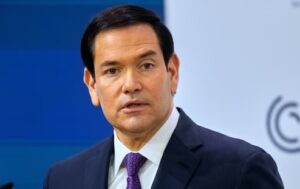
I’ve been one of the strongest defenders of NATO during my time as a United States senator because I found great value in it. And it wasn’t just about defending Europe. I said it also allowed us to have military bases in Europe that allowed us to project power into different parts of the world when our national security was threatened.
If now we have reached a point where the NATO Alliance means that we can’t use those bases, that in fact – that we can no longer use those bases to defend America’s interests, then NATO is a one-way street; then NATO is simply about us having troops in Europe to defend Europe, but when we need their help – not their help – we’re not asking them to conduct airstrikes. When we need them to allow us to use their military bases, their answer is no? Then why are we in NATO? You have to ask that question: Why do we have billions and billions of dollars, hundreds of billions of dollars, over the years trillions of dollars, and all these American forces stationed in the region if … in our time of need we’re not going to be allowed to use those bases?
So I think there is no doubt, unfortunately, after this conflict is concluded we are going to have to re-examine that relationship. We’re going to have to re-examine …. whether or not this Alliance that has served this country well for a while is still serving that purpose, or is it now become a one-way street where America is simply in a position to defend Europe, but when we need the help of our Allies, they’re going to deny us basing rights and they’re going to deny us overflight.
How imminent was Iran’s threat and what constituted the “tipping point” for Trump’s decision to act? Rubio’s responses:
- Part of the tipping point is the fact that Iran has been doing this for 47 years. This is a regime that is led by radical Shia clerics, by people who believe that it is their calling. I know this sounds fantastical, but it is absolutely true. This is a regime led by people who believe that it is their calling and their purpose in life to usher in the end of the world. These people want nuclear weapons.
- This guy Araghchi, their foreign minister – this guy is a liar. This guy was on television two weeks ago, denying that Iran had any missiles that could go beyond a certain limitation, and then they fired two of them. … Those things, the ones they launched the other day, could reach well into Europe. And actually, they had fired it on Diego Garcia. One of them failed, one of them was shot down, but they fired them at Diego Garcia, which is really far away.
- This is the weakest Iran certainly has been in 25 years, right now. Look at the damage they have been able to inflict on their neighbors at their weakest point. Imagine two years from now when they had had the opportunity to build – to double the number of missiles they had, to double the number of drones they had. Imagine that. That was not going to happen. The President was not going to allow that to happen. That’s why he took action.
On the closing of the Strait of Hormuz:
- Well, the Straits of Hormuz, those are international waters, right? So anything Iran does to impede commercial traffic is illegal. For all these countries that love to talk about international law, it is a violation of international maritime law to impede the free flow of travel in international waters, okay? So that’s number one.
- Number two, it’s illegal to bomb and hit and attack commercial shipping and sink them. I mean, that’s what the Nazis did during World War II in the Atlantic, and that’s what they’re doing now to ships that they – from countries they don’t like, that are flagged by countries they don’t like. These are terroristic acts that they’re undertaking.
- The United States gets very little energy through the Straits of Hormuz. Our allies ship out a lot of oil through there, meaning our Gulf allies, and certainly countries in Asia and Europe depend on it. … If in fact Iran decides that they are going to illegally control the Straits of Hormuz … this is a problem for the world. It’s countries around the world should be stepping up and dealing with that and saying that’s intolerable. And that’s what we’ve encouraged them to do.
2026 Contract With Our Readers

Rubio: ‘Why are we in NATO’ when we can’t use their bases during a military crisis? added by Editor One on
View all posts by Editor One →