
Special to WorldTribune.com
 By John J. Metzler, January 26, 2026
Location, Location, Location. Whether in real estate or international politics, the physical location of a particular property, country or sea-lane plays into its geopolitical importance.
From Manhattan to Miami, from Singapore to Suez and Gibraltar to Greenland, so much is determined by the location and the ease of access and transit.
So, when a former successful New York City real-estate developer such as Donald Trump as President of the United States views a remote place like Greenland, he uses significantly different optics than most Washington politicos or European leaders.
Greenland is legally part of the Kingdom of Denmark, an ancient nation whose mariners landed in and farmed Greenland long before Columbus discovered America. Though the former colony is now an Autonomous region of Denmark, the island with its tiny population of 58,000 people, about the size of metro-Burlington, Vermont, nonetheless has a legal say in its future.
Denmark is a founding member of NATO, the United Nations, and later joined the European Union. For the record Denmark never fought a war with the United States but did help it with troops in the Afghanistan and Iraq operations. Nonetheless Denmark’s small military is totally overstretched to protect giant Greenland much as they were in WWII, when the U.S. sent troops to the Arctic island to protect it from Nazi Germany.
Arctic Greenland, that huge island on the top of the world is one such place. Significant not only by size, it’s much bigger than Alaska, but where it is and what it holds.
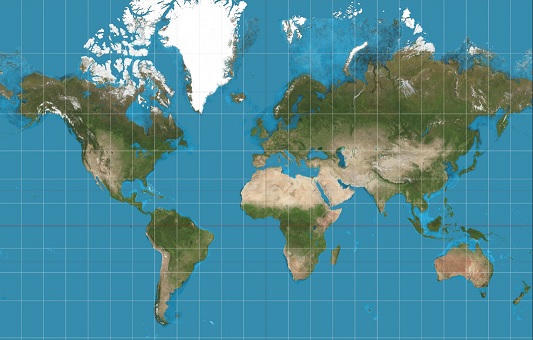
The Where is easily seen on mercator maps basically halfway between Europe and North America.
Refine the search and see it forms what the U.S. Navy calls the Greenland/Iceland/UK gap, the narrowest area blocking Russian submarine transit into the North Atlantic.
Look again and Greenland is the repository of vast mineral resources that modern economies need.
Some may call it flyover country. It is for many civilian transpolar flights from Europe to California for example. But more significantly it covers the flight path of any Intercontinental Ballistic Missiles fired from Russian territory towards North America; eg. the USA and Canada.
It’s where the Golden Dome project, the Trump Administration’s strategic plan to extend a defensive and protective missile protection Dome over Canada and the U.S. comes into play. A 1951 agreement with Denmark already allows expansion of American military bases.
When this writer visited this truly awesome arctic island on two occasions in the 1980’s, the real story was the important radar stations on Greenland, the most notable being Thule (renamed Pituffik) on the top of the world overlooking any hostile Russian missile launch.
Some sixty years ago the Distant Early Warning Line (DEW line) spread across 4,800 kms across northern Canada into Alaska and Greenland, monitoring the closest over-the-Pole routes of the former Soviet missile threat. Greenland forms that key piece of real estate offering surveillance and security for the U.S. Space Force. It’s what President Trump and NATO Secretary-General Mark Rutte quietly negotiated as the “Framework for the Future of Greenland.”
It’s completed by the Pentagon’s new National Defense Strategy 2026 to “provide the President with credible options to guarantee U.S. military and commercial access to key terrain from the Arctic to South America, especially Greenland, the Gulf of America, and the Panama Canal.”
Without question President Trump ruffled political feathers in Denmark and stoked tensions with many NATO states over his blunt demands to “acquire Greenland.” But when the rhetorical echo chambers were toned down by all sides, the proverbial Deal emerged where the USA would gain mining and wider military access to the isolated island.
Denmark’s Prime Minister Mette Frederiksen said her country is ready to engage in dialogue on strengthening security in the Arctic, but not compromising sovereignty.
Greenland’s local government based in Nuuk, pursues the chance for overdue economic prosperity alongside traditional “wait and see” indecision from Copenhagen’s central government. Greenlanders are impatient for political change but that doesn’t mean they wish to join the USA.
Though most indigenous Inuit Greenlanders likely prefer independence from Denmark, it’s the Royal Danish treasury that has long supported a bloated social welfare state in Greenland.
Here’s the issue;
- Under Trump’s plan, some islets of “sovereignty” will allow the American side to expand bases and military facilities for the Golden Dome, a successor plan to Ronald Reagan’s Strategic Defense Initiative (SDI) of the 1980’s.
- Share security with NATO and an Arctic Council group of countries including Denmark, Canada, Norway, Sweden and Finland.
- The U.S. will keep Russian and Chinese mining and military interests off Greenland as part of active deterrence.
Though the U.S. seems to have calmed the Greenland issue, there’s much political collateral damage with some NATO countries who see a political ice jam with Washington.
John J. Metzler is a United Nations correspondent covering diplomatic and defense issues. He is the author of Divided Dynamism the Diplomacy of Separated Nations: Germany, Korea, China (2014). [See pre-2011 Archives]
2026 Contract With Our Readers

Trump’s Greenland Deal: A geopolitical win for West despite ruffled feathers added by Editor One on
View all posts by Editor One →