
by WorldTribune Staff, February 23, 2026 Real World News
Thus far, just two arrests have been made in connection with the release of millions of page of the Epstein Files. Both occurred in Great Britain but potentially implicate a legendary U.S. bank and its CEO.
After former Prince Andrew was arrested last week, Peter Mandelson, the former UK ambassador to the U.S., was arrested Monday on suspicion of misconduct in public office. Documents under review include records of his communications with Jeffrey Epstein which make references to JPMorgan Chase CEO Jamie Dimon.
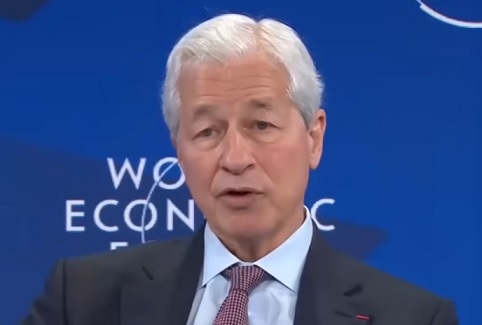
In May 2023, Dimon sat for a deposition related to several lawsuits filed against his bank over its history of involvement with sex trafficker Jeffrey Epstein.
One question put to Dimon was: “When did you first learn that Jeffrey Epstein was a customer of JPMorgan?”
His answer: “I don’t recall knowing anything about Jeffrey Epstein until the stories broke sometime in 2019” – meaning the stories about Epstein’s arrest by federal authorities in the summer of 2019 and his reported death a month later in a Manhattan jail cell.
The bank under Dimon processed over 4,700 transactions totaling more than $1 billion for Epstein, including payments to victims, according to the Epstein Files and lawsuits.
Given new damning documentation in the release of the Epstein Files, is Dimon to be believed?
Following Mandelson’s arrest on Feb. 23, Courthouse News reported on his ties and communications with Epstein which appeared to include a close relationship with JP Morgan officials:
In 2009, when Mandelson was at the heart of government, emails suggest he gave Epstein advance notice on a 500-billion-euro ($590 billion) bailout by the EU and sent him internal U.K. government information on banking policy.
The documents also indicate Mandelson sought changes to a planned tax on bankers’ bonuses after discussing the issue with Epstein. In one exchange, he told Epstein he was trying to amend the policy despite resistance from the U.K.’s finance ministry.
The correspondence suggests he encouraged further lobbying.
Epstein proposed that JPMorgan chief executive Jamie Dimon contact the U.K. government again, and Mandelson backed the idea, suggesting he “mildly threaten” the British chancellor.
[Meanwhile, JPMorgan Chase has admitted to debanking President Donald Trump following the J6 protest by closing dozens of his bank accounts.After a lawsuit filed last month by Trump and his company, JPMorgan revealed that it cut off more than 50 of Trump’s accounts in February 2021. The accounts were connected to Trump’s hotels, housing developments, and retail properties in Florida, Illinois, and New York. Also terminated was Trump’s personal private banking relationship that handled his inheritance from his father.
Court documents included letters and an unsigned 2021 note, telling Trump he would need to “Find a more suitable institution with which to conduct business.” The letter’s ending may have inspired frequent Trump posts: “Thank you for your prompt attention to this matter.”]
JPMorgan Chase maintained a business relationship with Epstein from 1998 to 2013. Dimon became the bank’s CEO in 2005. Epstein was convicted for soliciting a minor for prostitution in 2008.
Documents and statements from former JPMorgan executive Jes Staley have contradicted Dimon’s, with Staley claiming he discussed Epstein with Dimon multiple times, including when Epstein was arrested in 2006 and 2008. JPMorgan has denied these claims, stating that a review of records showed no direct communication.
The U.S. Virgin Islands and other plaintiffs alleged that JPMorgan knew of Epstein’s illegal activities, with internal emails showing that in 2006, the bank’s Global Corporate Security Division found reports detailing his crimes. Despite this, Epstein remained a “Wall of Cash” client, with some employees facilitating large cash withdrawals.
JPMorgan paid $290 million to settle a class-action lawsuit brought by Epstein’s victims and an additional $75 million to settle with the U.S. Virgin Islands.
Related: JPMorgan Chase agrees to pay Jeffrey Epstein’s victims $290 million, June 12, 2023
Dimon and JPMorgan have expressed regret over the relationship, stating that “in hindsight, any association with Epstein was a mistake.”
The bank has continued to maintain that it did not knowingly help Epstein commit his crimes and has tried to shift legal responsibility to Staley.
In a Sept. 24, 2025 letter to Dimon, Senate Finance Committee ranking member Ron Wyden cited filings as showing that JPMorgan Chase “processed hundreds of millions of dollars in wire transfers for Epstein through foreign correspondent accounts at now-sanctioned Russian banks in connection with the trafficking of women and girls around the world.”
The letter continued: “While I have long believed that JPMC should be under federal scrutiny for its failure to contemporaneously report Epstein’s suspicious financial activity to the U.S. Treasury Department, new reporting suggests that JPMC’s efforts to protect Epstein went all the way to the top. According to the New York Times, two executives in the private banking division emailed each other in 2008 saying that a decision on whether to retain Epstein as a client was ‘pending Dimon review.’ Similarly, another reported internal email noted that JPMC’s General Counsel Stephen Cutler was reviewing Epstein-related documents ‘for Jamie.’ ”
Following Dimon’s evasive response, Wyden fired back with a letter demanding additional answers.
In November of 2025, Wyden said: “With more and more Epstein information coming to light, the question is what happens next. Given the scale of Epstein’s trafficking operation and all the money involved, it’s unacceptable that only he and Maxwell have faced prosecution. Complicit banks ought to be investigated, as should anybody who helped Epstein traffic his victims or took part in the abuse.”
Last August, Trump signed an executive order aimed at guaranteeing “fair banking for all Americans,” stating in the order that “financial institutions have engaged in unacceptable practices to restrict law-abiding individuals’ and businesses’ access to financial services on the basis of political or religious beliefs or lawful business activities.”
2026 Contract With Our Readers

Follow the money I: Epstein spotlight on JP Morgan Chase chief Jamie Dimon added by Editor Two on
View all posts by Editor Two →