
by WorldTribune Staff, August 24, 2026 Non-AI Real World News
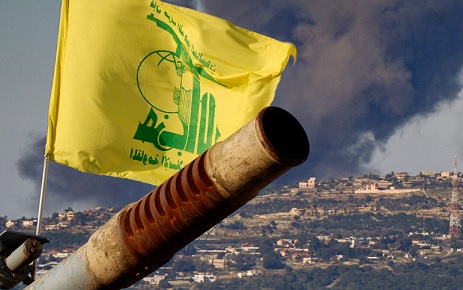
Operation Epic Fury, the U.S.-Israeli war against Iran, has opened a window of opportunity for the Trump Administration to free Lebanon from Iran’s grip through its most powerful proxy, the Hizbullah terror organization.
With this leverage, President Donald Trump has deployed a multi-layered diplomatic and economic strategy aimed at stripping Hizbullah of its weapons and restoring absolute state sovereignty to Beirut for the first time in many years.
The Trump Administration is directly mediating the 7th round of historic bilateral negotiations between Israel and Lebanon in Rome.
Brokered by the U.S. in June of this year, the deal establishes “pilot zones” in Southern Lebanon. Under this framework, Israeli forces phase out of occupied territory as the Lebanese Armed Forces (LAF) move in to take exclusive operational control.
A permanent Israeli military withdrawal is conditioned on the complete disarmament of Hizbullah.
Though Hizbullah’s leader, Secretary-General Naim Qassem, has flatly rejected America’s terms, the diplomatic arrangement has isolated the Iran-backed terror group as the primary obstacle to liberating Lebanon.
As part of the effort to dislodge Hizbullah, the United States has moved aggressively to dismantle the political economy that binds the terror group to its domestic base and the powers that be in Teheran.
Key moves by Trump’s team include:
• The U.S. State Department officially updated Hizbullah’s legal status, moving it from a stand-alone “terrorist organization” to an explicit operational extension of Iran’s Islamic Revolutionary Guard Corps (IRGC) Quds Force. This shifts the diplomatic narrative, stripping Hizbullah of its domestic shield as a “Lebanese resistance movement.”
• The U.S. Treasury announced unprecedented sanctions targeting international shell networks moving hundreds of millions of dollars between Turkey, the UAE, Iran, and Lebanon. This coincides with the rollout of the “toughest economic sanctions in history” against Teheran to block the financial lifeblood feeding Hizbullah.
• The U.S. is leveraging the popular mandate of Lebanese President Joseph Aoun, who has taken bold state measures to outlaw Hizbullah’s military wing, expel IRGC personnel, and strip the terror organizantion’s influence from Beirut’s international airport and commercial ports.
The opening salvo came during Operation Epic Fury, when U.S. Secretary of State Marco Rubio “quietly invited the Israeli and Lebanese ambassadors to a private, off-the-record meeting on April 14,” Richard Pollock wrote in an Aug. 21 substack analysis.
“The meeting drew little notice. Six additional face-to-face meetings have followed. The Lebanese and Israelis now are meeting closer to home in Rome. The next round is scheduled for September.”
The talks, Pollock continued, “could do more than reduce tensions on Israel’s northern border. They could weaken — and perhaps eventually dismantle the Hizbullah terror group — Iran’s most dangerous armed proxy in the Middle East.”
Related: UAE-Syria meeting signals consensus on restoring Lebanon’s sovereignty, June 30, 2026
Hezbollah, which recently possessed as many as 150,000 missiles
On July 20, Israel, the United States, and the Lebanese Armed Forces (LAF) agreed to a security “pilot program” in southern Lebanon. As part of the initiative, the Israeli Defense Forces (IDF) began withdrawing from three Lebanese villages and transferring security responsibility to the LAF.
The effort hasn’t been easy. Recently Hizbullah, which recently possessed as many as 150,000 missiles, launched suicide drones at the IDF, seriously injuring three including a commander. Israel immediately retaliated and IDF forces are ready to launch more attacks on the terror group. There may be more military escalation over the next few weeks.
On Aug. 20, the Trump Administration tightened its sanctions against Hizbullah, part of Trump’s economic stranglehold against Teheran which his administration is calling its “D-Day.”
Treasury Secretary Scott Bessent said in announcing the new sanctions: “This is going to be the greatest coordinated economic isolation in the history of the world, and we are going to them and saying, ‘You are either with us or against us. You want this murderous regime to end.’ ”
Doron Spielman, a spokesman for Israeli Prime Minister Benjamin Netanyahu, said in an Aug. 17 interview with JNS TV that the seven negotiation sessions could mark an historic change if Hizbullah is removed from southern Lebanon.
Referring to the pilot program, Spielman said: “The whole agreement is premised on the idea that this new future can exist only on one condition: Hezbollah must be out of the picture,” he said.
Spielman cautioned that success depends on whether Lebanon’s army can actually dislodge Hizbullah: “This is a pilot project. The jury is still out. As of right now, we’re waiting for the Lebanese army to show that it is able to dislodge Hizbullah. This is not an easy thing to do. We’re rooting for them.”
Pollock concluded: “Skepticism is warranted. But the opportunity is real. That’s precisely why this moment cannot be ignored.
“For the first time in a very long time, Lebanon is not merely enduring Hezbollah’s dominance. It may be beginning to challenge the group’s armed presence directly.
“If that effort succeeds, it will not only change Lebanon. It will strike at the heart of Iran’s terror strategy.”
Freedom Rocks! Until It Is Gone

U.S. diplomacy could free Lebanon from Iran’s stranglehold via Hizbullah added by Editor Two on
View all posts by Editor Two →