
by WorldTribune Staff, February 4, 2026 Real World News
For many years, Western mainstream media have portrayed communist China as a cordial “competitor” to the United States and not an adversary.
Those opinion factories have “defaulted to a comfortable phrase: China is our greatest competitor. It sounds modern, measured, even sporting, like global affairs is an Olympic podium where everyone accepts the rules, shakes hands afterward and goes home,” Miles Yu, director of the China Center at the Hudson Institute, wrote in a Feb. 2 op-ed for The Washington Times.
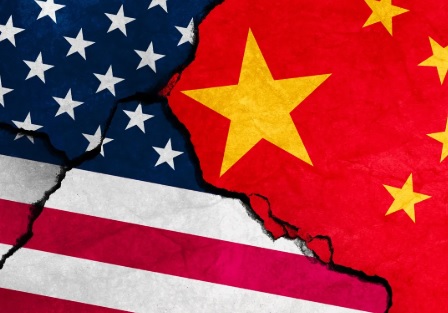 “That mental model is precisely the problem. It turns a strategic threat into a business rivalry, a regime project into a market challenge, and an adversarial system into a ‘peer’ that merely wants to win within the same game.”
The problem?
China has never played the same game.
The “China-as-competitor” narrative, Yu notes, “rests on three assumptions: One, that China is part of the global free market and democratic rules-based system. Two, China accepts those rules. Three, China aims to be the gold medalist while conceding the legitimacy of silver and bronze. None of these assumptions survives contact with reality.”
China “is a Marxist-Leninist one-party dictatorship that treats political pluralism as a mortal threat and treats its own citizens as subjects to be managed, censored and surveilled,” Yu, a former contributing editor at Geostrategy-Direct.com wrote.
Freedom House rates China “Not Free” with an overall score of 9/100, reflecting systematic repression of political rights and civil liberties.
China is the world’s largest jailer of journalists, with more than 100 currently detained, according to Reporters Without Borders.
“The point is not moral posturing; it is strategic clarity. A regime that cannot tolerate free speech at home will not behave as a rule-abiding participant abroad. A system built on coercion does not suddenly become a sportsman because it exports solar panels,” Yu noted.
If China was the actual “competitor” that legacy media contend it is, wouldn’t access would run both ways?
“Students, ideas, media, platforms and capital would flow with friction, but not with one-sided locks,” Yu wrote.
Examples:
For the 2024-2025 academic year, 265,919 Chinese students were allowed to study in the U.S. Only about 800 Americans were in China for the 2023-2024 academic year. For every American studying in China, more than 3,000 Chinese are studying on American campuses.
While Americans can argue over whether to ban a Chinese-controlled app such as TikTok, the Chinese Communist Party has executed a sweeping ban regime against American and Western platforms inside China, not because, as Yu pointed out, “of privacy concerns but because free information is incompatible with totalitarian control.”
In China, ordinary citizens cannot freely access X, Facebook, Instagram, Gmail, Google Search, Google Maps, Google Drive, YouTube, WhatsApp, Signal, Snapchat, Wikipedia, Quora, Pinterest, Vimeo, or the websites of virtually all major Western newspapers.
“The result is a society engineered for obedience, where narratives are not debated but issued,” Yu wrote.
On the economic front, “competition” presumes a largely market-based contest: innovate, price, manufacture, sell.
“When a command state floods strategic sectors with subsidies, directs capital through policy banks, shields domestic markets and leverages regulatory power to tilt outcomes, the contest is no longer ‘free market competition.’ It is industrial coercion wearing a price tag,” Yu wrote.
“Investigations into Chinese electric vehicles and other strategic industries have repeatedly highlighted patterns of massive state intervention that distort prices and overwhelm foreign producers. That is not fair competition; it is predatory statecraft.”
Even after years of tariff battles and “decoupling” talk, the U.S. still runs an enormous goods trade deficit with China: $295.4 billion in 2024.
Most important, Yu noted, “the ‘competitor’ framing misses the regime’s strategic end state. A competitor seeks to outperform you; an adversary seeks to destroy you. Beijing’s project is not simply to sell more products or file more patents. It is to normalize authoritarian governance as an alternative to free society and democratic governance, and to shape the global environment so that free nations face higher costs for remaining free.”
Yu added: “You can negotiate with a competitor over tariffs. You cannot ‘outcompete’ a system that views your political model as a contagion and a mortal threat.”
Yu concluded:
Calling China a “competitor” invites complacency: Just run faster, innovate more, build better. Calling China the No. 1 adversary invites realism: Defend the information space, de-risk critical supply chains, protect research integrity, harden democratic institutions, and meet coercion with collective deterrence.
You cannot compete with a regime that blocks your speech, harvests your openness, weaponizes your dependencies and seeks to make your system look obsolete. This is not a race for a medal. It is a contest over whether free societies remain free.
2026 Contract With Our Readers

Analyst: ‘Competitor’? No, China is the enemy added by Editor Two on
View all posts by Editor Two →