
by WorldTribune Staff, April 29, 2026 Non-AI Real World News
In unsettling testimony on April 28 to the House Foreign Affairs Committee, U.S. Air Force Lt. Col. (Ret) Tara O warned:
Those in South Korea who are supportive of the communist parties of China and North Korea, and who are anti-U.S., anti-ROK, anti-Japan — are trying to change the fundamental nature of the ROK by deleting freedom from the constitution, and adding a socialist agenda into it, which would essentially turn South Korea into a satellite state of Communist China.
While the anti-freedom faction has taken control over the levers of power, including the government and the major media, there are South Korean patriots who are desperately fighting against this potential outcome.
She noted that such efforts in previous years were rebuffed but are again being incorporated by referendum in nationwide regional elections, the integrity of which are no longer trusted by many Koreans.

“The public does not demand this change. It is only a small segment of the society, specifically, those who are pro-CCP and pro-socialism, who want it. But the details about the changes are not available to the public.”
Dr. Tara O is an Academic Council Member of the Victims of Communism (VOC) Memorial Foundation focused on the Korean peninsula.
Following are excerpts from her opening statement:
South Korea, aka the Republic of Korea (ROK), which was established in 1948, is an important refuge for North Korean defectors seeking freedom. The defectors from North Korea have a place to go. Of course, it’s a very difficult and dangerous journey to leave North Korea and reach South Korea. But once they arrive in South Korea, they get their national identification card. They get ROK citizenship. It’s automatic.
This place of freedom, however, is losing its freedom. There are more and more restrictions on freedom in the Republic of Korea — restrictions on freedom of speech, freedom of religion, and other freedoms.
Increasingly, the measures to suppress freedom are being codified into laws, and now they are even trying to change the constitution. And who are the people so focused on eroding freedom in South Korea? They are pro-Chinese Communist Party (CCP), pro-Korean Workers’ Party (in North Korea), anti-ROK, anti-U.S. and anti-Japan. They now control the majority of the levers of power in South Korea.
The (ROK) constitution is replete with references to the concept of freedom, such as “free democratic basic order” in Article 4. Article 20 guarantees freedom of religion. Article 21 guarantees freedom of speech, press, assembly, and association.
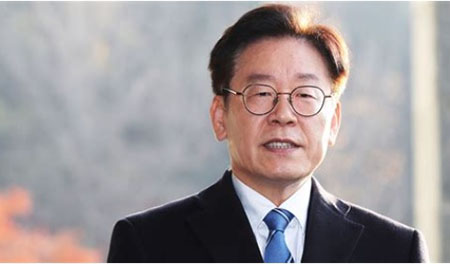
But the Lee Jae-Myung administration, the Democratic Party of Korea (DPK) & its associated political parties are about to change the constitution. The public does not demand this change. It is only a small segment of the society, specifically, those who are pro-CCP and pro-socialism, who want it. But the details about the changes are not available to the public.
So I go back to 2018 under the Moon Jae-in administration, and his party, the DPK, and their efforts to change the constitution at that time, including trying to delete the word “freedom” from the constitution to show what they’re planning to do. At that time, they proposed:
– Delete “Free Democracy as the basic order” for the ROK
– Add “The realization of a flexible and equal democratic society”
– Delete “free market economy”
– Add “equal democratic society”
– Added the term “social economy”
What may sound like subtle word substitutions are fundamental changes to the political and economic system of the ROK.
The intention is clear. All these changes show a move away from a freedom-based democracy and market economy toward socialism, which is central planning and central distribution. It’s about taking the choices and decision making away from individuals and concentrating them centrally in the government. It’s about eroding individual freedom, because the state makes all the decisions, like in North Korea. There, the state determines where you live, where you work, whether you go to college or not, whether you can attend a family funeral in a different city or not. We call this totalitarianism.
Out of all these proposed changes, the DPK made deleting freedom from the ROK constitution its party platform in 2018. They withdrew their efforts to do so after they faced immense opposition. They then bided their time.
They’re again trying to change the constitution to change the fundamental nature of the freedom-based republic, but less obviously this time, by being quiet about the content.
Since what they’re trying to change is not widely known, it is more difficult to find what these changes are.
One thing is clear. They’re trying to change the constitution quickly. In order to do so, the DPK and smaller parties with shared outlook are trying to pass a law to have a referendum to change the constitution in the upcoming elections in a little over a month.
On June 3, 2026 (and in early voting on May 29-30, 2026), nation-wide regional elections will be held in South Korea. These are elections for provincial governors, mayors at the city, county, and district-levels, legislatures at the city, county, and district levels, education superintendents at the city, county, and district-levels. These elections are significant, and involve a far larger number of elected officials than the general election.
And Chinese citizens (who are green card holders—after 3 years residency in South Korea) can vote in South Korean regional elections. Once these Chinese citizens register to vote, then they can vote in Korean regional elections, even if they live in China.
Korean elections, especially since the April 2020 elections, have been mired in election fraud controversies, such as more ballots than registered voters, stacks of pristine unfolded ballots found in piles in ballot containers, and 3,170 votes in a row counted for 1 candidate by a ballot counting machine.
So the DPK and the Lee Jae-Myung administration want to add the referendum to change the constitution to occur during the June 3 elections. Meanwhile, the controversy over the problems with the processes and methods of elections have not been resolved.
One item that would be added to the constitution, which surfaced recently, is “5.18.” The political parties pursuing socialist agenda want to put “5.18,” a violent event, in the constitution.
“5.18” was an incident which occurred on dates that included May 18, 1980 in Gwangju. It is often referred to as the “Gwangju Uprising” in English and in Korean, simply “5.18.” This is very controversial in South Korea. Those in power now label it a “democracy movement,” while others call it a riot or a rebellion.
And this leads to my next topic, suppression of freedom of speech.
Several years ago, the National Assembly (Korea’s version of U.S. Congress) passed the “5.18 History Distortion Law” that allows the government to punish people with up to 5 years imprisonment and fines if they say 5.18 was a riot or that North Korea was involved. In fact, they already put a Vietnam Veteran, who researched 5.18, in prison for 2 years. That was Dr. Jee Man-won. He was in his 80s.
Now, they’re investigating a youth, and one of the questions they asked him during an investigation was “why do you not call 5.18 a democracy movement?”
Why would they try to silence people from saying anything other than their narrative, even passing a law to imprison people? Moreover, why is it important to rush and put it in the constitution?
Another issue that gets censored is criticism of Communist China.
More than 80%, and 90% in some surveys, of South Koreans do not like China, especially after they realized that Chinese influence on domestic politics is so prevalent in South Korea.
Banners that criticize the Chinese Communist Party (CCP) or calls for an investigation into election fraud are being labeled as “hate speech,” and get investigated just as they do inside the PRC.
At an anti-CCP rally in October 2025, Korean youths tore up the Communist China’s flag. The police then investigated them.
But when an anti-U.S. group tore up a US flag in front of the US Embassy in Seoul, nothing happened to them. No investigations. So this is prejudicial.
To help understand the scope of the problem, it’s useful to point out that the major media in South Korea do not report in the news on massive rallies where people call for defending South Korea, a strong alliance with the U.S., “CCP Out,” or for the government to investigate election fraud. Thus, people share these events through social media. And the social media — YouTube (Google Korea), X Korea, Facebook, Threads, etc. are then subsequently censored, as if copying censorship practices of the PRC.
The Republic of Korea has been seen as a shining example of America’s success story. It adopted an American-style freedom-based political and economic system, and thrived. Unlike North Korea, where people lack freedom and food, South Koreans enjoyed freedom & prosperity. But that’s changing.
Following is a video of the hearing. Dr. Tara O’s testimony begins at 14:40:
Support Free Press Foundation

Analyst testifies that ‘anti-freedom’ Left in South Korea now controls media, ‘levers of power’ added by Editor Two on
View all posts by Editor Two →