
Special to WorldTribune, July 16, 2026 Real World News
Geostrategy-Direct, July 7, 2026
The Pentagon has warned that communist China’s rapid expansion of its nuclear forces is a “breakout” requiring an immediate response and seemingly having no end.
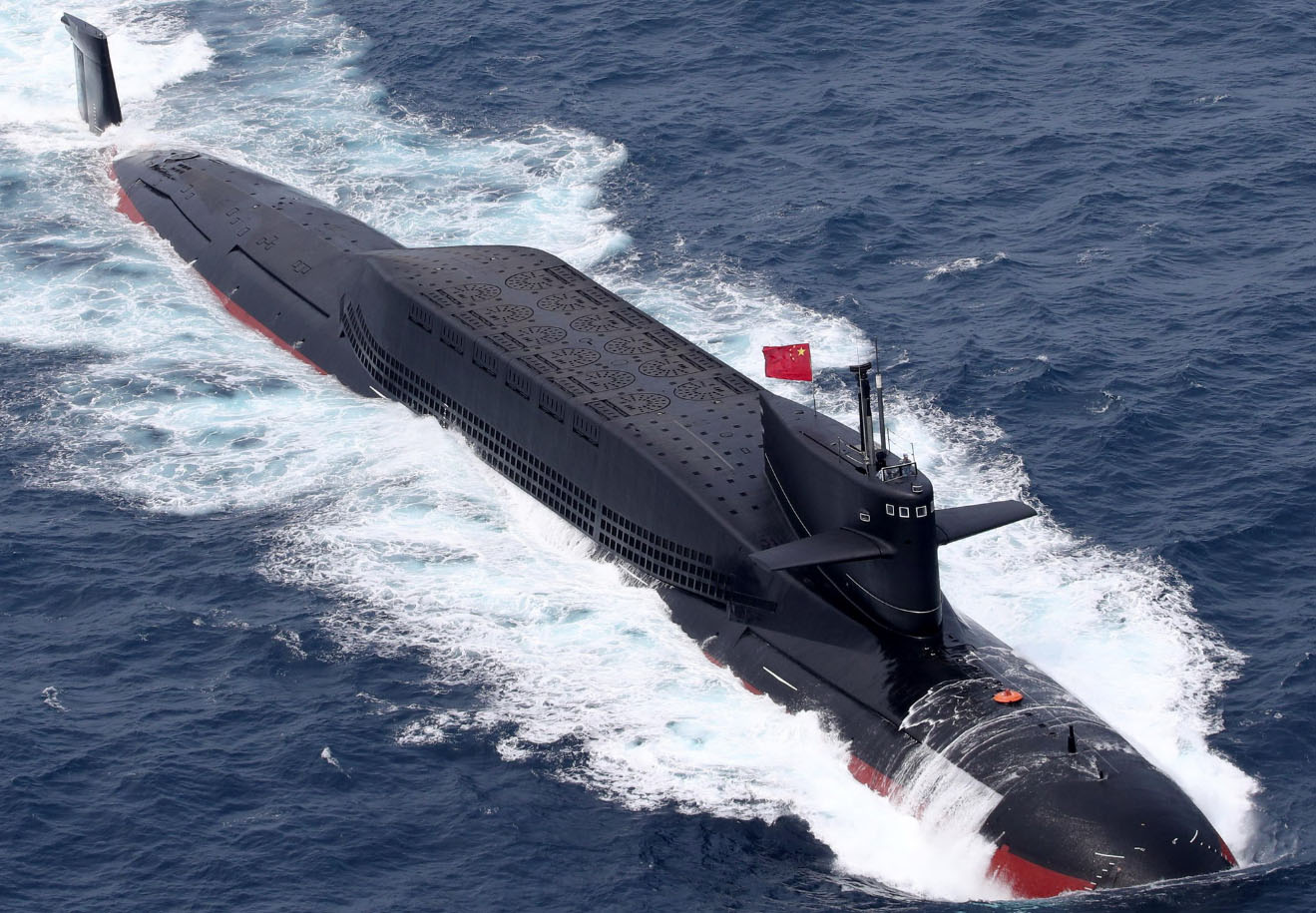
That warning resurfaced in a major way on July 6, as China carried out the test launch of what analysts say is likely an advanced nuclear capable JL-2 missile or new JL-3 multi-warhead submarine-launched ballistic missile (SLBM),
The underwater open-ocean test firing is the first from a Chinese missile submarine since 1988, and the first known one from a modern vessel.
The launch rattled regional neighbors Japan, Australia, New Zealand and Taiwan. Statements issued by those nations condemned the test.
The Trump Administration criticized China for conducting a test launch of a provocative submarine-launched, nuclear-capable missile that the State Department called a sign of Beijing’s continuing arms buildup.
The unarmed missile traveled from an area around the northeast China coast and landed in the southern Pacific Ocean, State Department spokesman Tommy Pigott said in a statement.
“Beijing’s rapid and opaque nuclear weapons buildup is of great concern to the region and the world,” he said.
“We continue to urge China to engage in meaningful arms control discussions and commit to a regularized notification arrangement for all intercontinental-range ballistic missile and space launches consistent with commitments made” by the other permanent members of the U.N. Security Council — all nuclear powers, he said.
Retired Navy Capt. Jim Fanell told security correspondent Bill Gertz the missile test is a clear sign that China’s military is abandoning a decades-long Chinese policy of “no first use” of nuclear weapons in a conflict.
“The PLA Navy’s test launch of a submarine-launched ballistic missile deep into the South Pacific is a clear and unambiguous declaration from the Chinese Communist Party of its commitment to a first-strike nuclear capability,” said Fanell, a former Pacific Fleet intelligence director.
Despite years of repeated assertions of fielding a limited second-strike strategy, the test launch from a submarine, most likely an improved Jin-class/Type-094A submarine “differs substantially from the PLA Strategic Rocket Force’s test launch of a nuclear-tipped intercontinental ballistic missile in 2024,” he said according to the Washington Times.
China military affairs expert Rick Fisher said the missile most likely was a JL-3, based on images of the missile disclosed on Chinese social media.
Fisher, with the International Assessment and Strategy Center and a Geostrategy-Direct.com contributing editor, said Chinese officials have said the missile is expected to be armed with multiple nuclear warheads, with each missile submarine carrying 12 JL-3 missiles, each capable of launching between five and eight Multiple Independently-targetable Reentry Vehicle (MIRV) warheads.
Full Report . . . . Current Edition . . . . Subscription Information

China’s first-strike nuclear capability? Submarine-launched missile triggers ‘breakout’ alarm added by Editor Two on
View all posts by Editor Two →