
Special to WorldTribune.com
 By John J. Metzler, June 26, 2026
If is a big and a most consequential word in the English language. The word connotes wishes and conditionality and often aspirations.
If also is one of the shortest words holding a very long explanatory meaning which embodies hope but just as easily signals fatalism.
If, for example, the Islamic Republic of Iran’s denizens of deception were to adhere to and honor the current Memorandum of Understanding (MoU) with the United States, there may be a mutually beneficial peace settlement for the U.S., Israel, and its Arab Gulf allies.
If, the ceasefire holds and the accord succeeds, Iran would gain too for its own beleaguered population.
If the Islamic regime were to truly renounce nuclear weapons ambitions and not plan any future tricks to change their status, then Teheran may have finally resolved the core concern confronting the world.
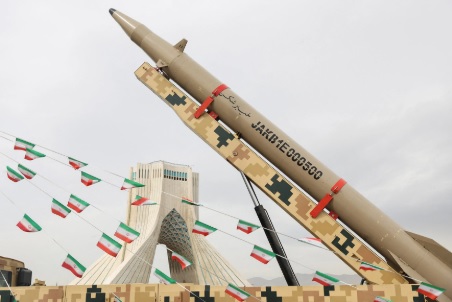
Yet, given media misperceptions, the MoU is being presented as a Memorandum of Misunderstanding.
But through their well-honed games of Bazaar negotiations, encompassing the mysteries of millennia of negotiation and bargaining, this still-standing radical regime remain merchants of mendacity.
Recall a few things the mainstream media has totally missed. An MoU while significant remains a signed non-binding document of intent. BUT it doesn’t hold the legality of a Treaty. It’s about moving to the next step “in good faith” which is indeed a stretch of credulity with the Islamic Republic. But process per se, is not necessarily a result.
So, let’s view the fourteen point MoU opening a 60 day negotiation period presumably reaching a formal deal skirting the precipice of risk and reward.
If Teheran truly does hold to the agreement, in paragraph #8 “Islamic Republic of Iran reaffirms that it shall not procure or develop nuclear weapons,” that’s an epic American win.
Paragraphs #4 and #5 call for ending the U.S. Naval blockade and Iran reopening the Strait of Hormuz to commercial shipping through these international waters without harassment or toll.
.
Significantly the MoU doesn’t mention Teheran’s deadly missile forces which threaten Israel and Gulf States nor Iran’s support to proxy terrorists such as Hizbullah and Hamas.
Let’s face it, the MoU is equally about gasoline prices at the pump across America as much as any geopolitical solutions for the Middle East and the stressed global economy.
With the Congressional Midterm elections looming in November, the Trump Administration cannot afford for American gas prices to stay at Biden-era levels, the ensuing knock-on role of inflation, nor risk a tipping point for global recession.
Only If, the final “deal” gets approval by the UN Security Council, it’s then official.
The pure nonsense being peddled that the U.S. lost the war to Islamic Iran is beyond ludicrous.
IF one assesses the grim Iranian economy since February, and the state of infrastructure, the military, (Air Force, Navy, etc.) and sees the extensive bomb damage to facilities throughout the Islamic Republic it would be an absurd cartoon fantasy to conclude that Iran somehow won the war.
|
The pure nonsense being peddled that the U.S. lost the war to Islamic Iran is beyond ludicrous. |
Yet since the Mullah regime is still standing despite the military battering, we then see an Unfinished job. Allowing the Islamic Republic to survive in its weakened form sets the stage for rebuilding through renewed petroleum revenues, investments as the end of economic sanctions loom after 60 days. That’s if the Teheran government is prudent.
But Teheran’s parallel Revolutionary Guard (IRGC) regime wants conflict with the West and the Gulf Arabs, so brace for more trouble. Tensions remain high amid sporadic military flareups.
Crown Prince Reza Pahlavi, a leader in the Iranian civilian opposition stated recently, “Dealing with a regime that murdered 40,000 Iranians in January is not only morally wrong but strategically misguided.” He told the Times of London, “Any deal with this regime will ultimately fail. It can never be trusted.”
During the G-7 Summit in Evian France, the European allies were near giddy over the MoU and cessation of the Iran war. Why? They savor the fool’s gold of renewed trade and commerce with an unsanctioned Iran!
|
The region stands at an eerie pause. The people of Iran are the tragic victims. Was there a clear winner? Hardly, but there are so many losers. |
Nonetheless, Israel simply cannot coexist with Hizbullah in Lebanon, nor can the Lebanese government in Beirut, which uncomfortably hosts these armed Iranian proxies. The MoU clearly states in the first paragraph, “ensuring the territorial integrity and sovereignty of Lebanon.”
Viewing the MoU, Ronald Reagan’s advice still holds, “Trust but Verify.” If Iran doesn’t comply and characteristically cheats in the first 60 days or followup, President Donald Trump has been crystal clear that the U.S. military forces will reply with force and fury. That’s the equalizer.
The region stands at an eerie pause. The people of Iran are the tragic victims. Was there a clear winner? Hardly, but there are so many losers.
John J. Metzler is a United Nations correspondent covering diplomatic and defense issues. He is the author of Divided Dynamism the Diplomacy of Separated Nations: Germany, Korea, China (2014). [See pre-2011 Archives]

‘If’: A memorandum of clarification about that U.S.-Iran MOU added by Editor One on
View all posts by Editor One →