
Special to WorldTribune.com
 By John J. Metzler, January 20, 2026
We cannot look the other way to the unfolding crisis in Iran.
Blood has run in the streets of Teheran and provincial cities as the Islamic regime has turned its vengeance on its own people. Thousands have died in this predictable but avoidable carnage. And it’s not over yet.
The world now nervously waits on whether U.S. President Donald Trump will follow through on his threats to topple the reviled Ayatollah Khamenei regime or step back and with a “wait and see” attitude and try to deal with the wounded but still venomous Islamic Republic.
Repression has weakened the opposition but the regime as well. The country is ready to implode.
For nearly a half century Iran has lived under the yolk of the Ayatollahs and a bizarre theocratic regime which has turned back the clock on Iran’s future. It has used politicized Islamic dogma to marginalize women’s rights, to mock human rights, to pursue an agenda with barbaric executions and hangings which evoke a dark era.
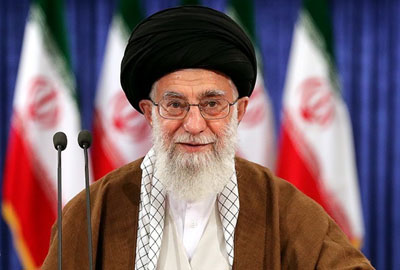
But its downfall may be less from trampling on human freedoms than from the self-inflicted economic collapse and the spiraling fate of the national Rial currency, which has focused even those who avoided politics, until now.
Moral imperative
Teheran’s bloody tragedy evokes China’s Tiananmen square. It’s easy to be outraged, but it’s much easier to “turn the channel” to watch something more pleasant than State sanctioned barbarism.
People had to search through body bags and then pay to retrieve the corpses of loved ones from the government ghouls who run the Revolutionary Guards. This is a regime of terror motivated by a Cult of Death.
UN Secretary General Antonio Guterres cautioned, “maximum restraint at this sensitive moment” and called on all “actors to refrain from any actions that could lead to further loss of life or ignite a wider regional escalation.”
Significantly during the height of the crisis, the United States pressed for a UN Security Council meeting.
American Amb. Mike Waltz stated that “the level of violence, the level of repression that the Iranian regime has unleashed on its own citizens…has repercussions for international peace and security.” He added “The Iranian people “are demanding their freedom like never before in the Islamic Republic’s brutal history.”
Addressing the Council, dissident and former political prisoner Massih Alinejad added that millions of Iranians need “real and concrete action” against a regime that doesn’t understand the language of diplomacy. She faulted the UN for not responding “with the urgency this moment demands” and challenged the Secretary General, “Why are you afraid of the Islamic Republic?”
Iran’s Western enablers have long rationalized that the regime despite its faults brings a form of status quo stability. That’s for the oil business especially with China, which not surprisingly remains Iran’s largest trading partner.
But where are the multinational Brigades of Palestine protesters from the “River to the Sea” crowds which rocked campuses and cities across the world for the past year? Are they not interested in Iran’s fate and spilled blood?
Strategic Imperative
Iran’s importance remains unrivaled in the Middle East.
Long before the Ayatollahs seized power from the former Shah, Iran was a fast-improving socio/economic success story fueled by petrodollars.
Women did not face legislative/religious oppression. Iran was a geopolitical lynchpin in a very unstable Middle East.
Since the Iranian revolution in 1979, Iran became a state sponsor and paymaster to the triple entente of terrorism ranging from Hizbullah to Hamas and the Houthis.
Future Path
The world still faces a clear and present danger from the Islamic Republic, weakened as it is from domestic pro-demonstrations as well as the massive losses it suffered from U.S. and Israel air attacks during the Twelve Day war in June. Though its embryonic nuclear weapons capacity is largely destroyed, nonetheless the Islamic Republic has the current conventional military capacity to wreak regional havoc and smash domestic dissent.
Donald Trump warned, “It’s time to look for new leadership in Iran.”
Iran’s exiled Crown Prince Reza Pahlavi has beseeched the world to help pro-democracy protesters to topple Iran’s regime stating he is confident “the Islamic Republic will fall, not if but when.” He told the media, “The Iranian people are taking decisive action on the ground. It is now time for the international community to join them fully.”
Crown Prince Reza has positioned himself as a moderate political alternative and calls for a constitutional monarchy and secular society.
Will we again see reluctance or realpolitik in dealing with the Mullah regime?
The flickering flame for a Free Iran lights the path ahead!
John J. Metzler is a United Nations correspondent covering diplomatic and defense issues. He is the author of Divided Dynamism the Diplomacy of Separated Nations: Germany, Korea, China (2014). [See pre-2011 Archives]

Iran’s crisis; Impossible to look away added by Editor One on
View all posts by Editor One →