
Special to WorldTribune, May 27, 2026 Real World News
Geostrategy-Direct, May 26, 2026
By Richard Fisher
New revelations following the May 13-15 summit between Chinese Communist Party (CCP) leader Xi Jinping and United States President Donald Trump indicate that Xi subjected Trump to an unprecedented “intense diatribe,” becoming “vocal and agitated,” directing his rage at Japanese Prime Minister Takaichi Sanae’s moves to strengthen Japan’s defense posture.
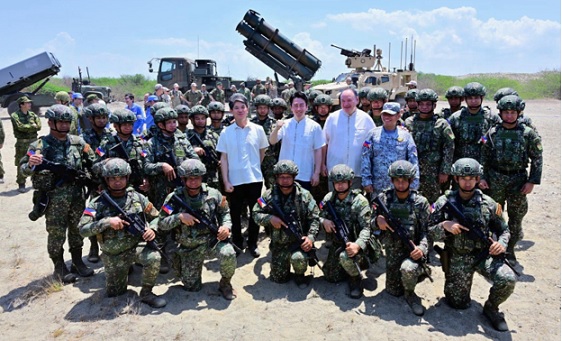
President Trump apparently responded to Xi’s rages against Takaichi by defending her leadership, pointing to North Korea’s growing threat to Japan, and then called Takaichi to brief her on the exchange soon after Air Force One departed Beijing on May 15, descriptions of which were leaked to Japanese news outlets and then also revealed on May 25 by the Financial Times, which stated:
“President Xi Jinping castigated Japanese Prime Minister Sanae Takaichi for her country’s ‘remilitarisation’ in an intense diatribe during his summit with Donald Trump, according to seven people familiar with the meeting in Beijing… Xi became vocal and agitated when discussing Japan, surprising US officials because the subject had not featured in talks with their Chinese counterparts before the summit. Several people said Xi’s verbal attack was the most heated part of the two-day summit between the leaders…After Xi lambasted Takaichi and Japan’s rising defence spending, Trump responded that Tokyo had to take a more assertive security stance because of the rising threat from North Korea.”
In part, Xi very likely decided that he could attempt verbal coercion of President Trump due to long term CCP and Chinese government assessments that the United States is a declining power compared to China, and to more recent assessments that China’s power is now equal to that of the United States.
In a May 21 interview published in third-level Chinese state media “Guancha,” Propaganda Department star and Renmin University professor Jin Canrong explained how China’s power is now equal to that of the United States, which would help justify Xi Jinping’s insulting treatment of Trump, with Jin saying:
“Sino-U.S. relations have undergone significant changes in the past year, experiencing a strategic shift. For the previous eight years, the US was the one provoking trouble, and mainland China was the one responding. Or, to put it in the words of netizens, it was “the U.S. attacks, we defend,” with us on a strategic defensive. But last year, China’s policy towards the U.S. changed; it began to confront the U.S., and even won — in several areas. Thus, the strategic confrontation between China and the U.S. shifted from strategic defense to a strategic stalemate.”
Nevertheless, apart from Xi’s failure to intimidate Trump or take advantage of Trump’s desire for “stability” in the U.S.-China relationship, it is also the case that Xi’s “diatribe” betrays China’s weakness and even Xi Jinping’s own personal weakness.
Full Report . . . . Current Edition . . . . Subscription Information

Leaks: Xi Jinping unexpectedly revealed weakness by raging to Trump about Japan added by Editor Two on
View all posts by Editor Two →