
Special to WorldTribune, April 15, 2026 Real World News
By Geostrategy-Direct, April 14, 2026
By Richard Fisher
Amid numerous reports, and apparent government intelligence findings that China has recently supplied weapons to Iran and was on the verge of sending more, President Trump has engaged in a personal pressure campaign against China, for which he also claims success!
On April 8, Trump posted on Truth Social:
“A Country supplying Military Weapons to Iran will be immediately tariffed, on any and all goods sold to the United States of America, 50%, effective immediately. There will be no exclusions or exemptions!”
“A Country” was widely interpreted as China, which has denied this allegation on multiple occasions, the latest on April 13, when Chinese Foreign Ministry spokesman Guo Jaikun called the accusation “baseless smears.”
But on April 15, again posting on Truth Social, President Trump claimed he had gotten Chinese Communist Party (CCP) leader Xi Jinping’s attention, saying:
“China is very happy that I am permanently opening the Strait of Hormuz. I am doing it for them, also — And the World. This situation will never happen again. They have agreed not to send weapons to Iran…”
While China has yet to confirm that they have so “agreed,” as doing so would upend much of China’s diplomatic maneuvering and intense propaganda campaigns attacking the United States, such an agreement by China would represent a major victory for Trump and the cause of peace in the Middle East.
China, Russia and North Korea have the means to extend the survival of the Islamist terror regime in Teheran and its war against Israel and the United States, by supplying desperately needed weapons and economic support, but if China is not going to provide leadership to begin such supplies, then the Iranian regime may soon have to make peace with Trump and submit to his demands.
But Trump was correct to pressure China, as it has had a military and military-technical relationship with Iran since the mid-1980s, to include assistance with Iran’s nuclear program and significant assistance enabling Iran to produce many types of liquid and solid fuel ballistic missiles.
Since the mid-1990s the U.S. has imposed sanctions on Chinese companies arming Iran but the U.S. and other countries simply have failed to defeat China’s creative proliferation strategies — which helps explain the historic dimension of Trump’s victory.
A more recent record of Chinese weapons transfers includes the following:
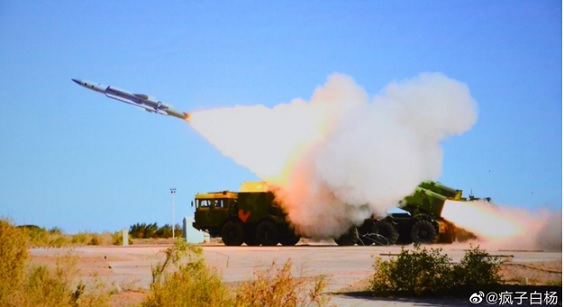
Supersonic Cruise Missiles: Both President Donald Trump and Secretary of War Pete Hegseth have made statements that indicate China transferred new supersonic speed anti-ship missiles to Iran.
President Trump in March 25 remarks referred to an “element” or target of importance that he declined to identify, stating:
“100 missiles going 2,000 miles an hour were coming at this element of importance, tremendous power and importance. And of the 100 missiles coming at us, 100 missiles were immediately shot down, shot out of the air, fall into the sea. Not one missile got through.”
Sec. Hegseth, during an April 8 Pentagon press conference, provided additional detail:
“Iran shot hundreds and hundreds of missiles and attack — one way attack drones at our aircraft carrier. They were obsessed with it, and they never got even close. Every single one of those shots, easily shot down miles and miles away from the Abe Lincoln. They were blowing ammo into fantasy land.”
These statements suggest that the U.S. Navy nuclear powered aircraft carrier USS Abraham Lincoln and its escorts won an historic modern-era naval battle against a large Iranian missile-and-drone attack, the full details of which have yet to be revealed.
One could ask, were the reported 2,000-mile-per-hour missiles ballistic or cruise missiles? What proportion of the threat consisted of one-way attack drones? And what U.S. defensive systems accounted for the interceptions?
Those questions matter because, if the missiles were cruise missiles, that could indicate that Iran had obtained a new class of high-speed anti-ship weapon. From open sources, Iran has not been known to possess an indigenous anti-ship cruise missile capable of high supersonic speed.
But on Feb. 25, Reuters, citing “six people with knowledge of the negotiations,” reported that Iran was “close to a deal with China” to purchase the CASIC CM-302, a 170-mile-range export version of the YJ-12 anti-ship missile, a roughly 300-mile-range weapon in service with the Coastal Defense Force of the People’s Liberation Army Navy.
But the important data point is that the CM-302/YJ-12 is a ramjet-powered anti-ship cruise missile with a speed of about 2,000 miles per hour, matching the description provided by President Trump.
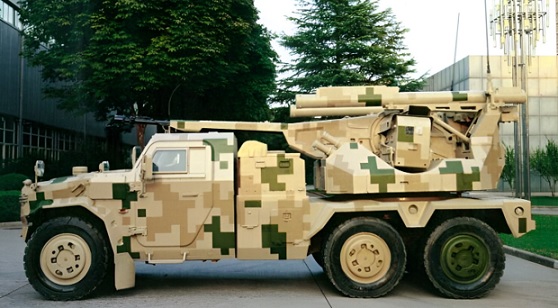
If China did provide Iran with the CM-302/YJ-12 before the beginning of the latest Iran war on Feb. 28, that would constitute a dramatic escalation in China’s military assistance to Iran that could be followed by more of these anti-ship cruise missiles or with more capable anti-aircraft, anti-ship and land-attack missiles.
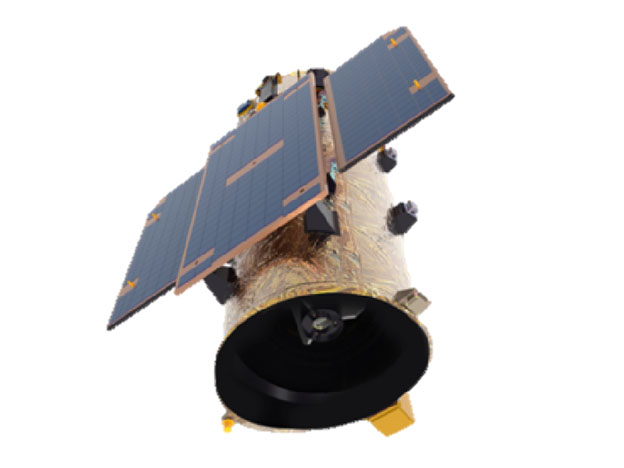
Surveillance Satellite: On the X platform on Feb. 2, 2026, analyst Shivan Mahendrarajah stated, “Iran taps into China’s advanced satellite network, which delivers persistent (24/7), all-weather, day-and-night imaging, high-resolution video, SIGINT, and real-time ELINT on US Navy targets …Fusion of Chinese space-based ISR and Iranian missiles creates a real-time kill chain targeting naval traffic in the Persian Gulf, Gulf of Oman, and Arabian Sea.”
But then on April 15 the Financial Times reported that the Chinese company “Earth Eye” had sold its 0.5 meter resolution TEE-01B optical satellite to Iran, which is likely a product of the Chuang Guang Satellite Co., which makes the 0.5 meter resolution Jilin-1 optical satellite.
This satellite, and likely contracted satellite data processing “services” from Earth Eye have assisted Iranian surveillance of U.S. forces and regional economic targets struck during Iran’s missile terror campaign.
Full Report . . . . Current Edition . . . . Subscription Information

Trump-Xi deal? U.S. carrier thwarted attack by China-supplied anti-ship missile added by Editor Two on
View all posts by Editor Two →