
by WorldTribune Staff, June 15, 2026 Non-AI Real World News
With a key legislative election coming in October, former Israeli security officials believe Israeli Prime Minister Benjamin Netanyahu is locking horns with U.S. President Donald Trump due to pressures from his political allies.
“He’s desperate that he’ll lose the elections,” Chuck Freilich, a former deputy national security advisor, said of Netanyahu. “Clashing with Trump is the last thing Israel should do.”
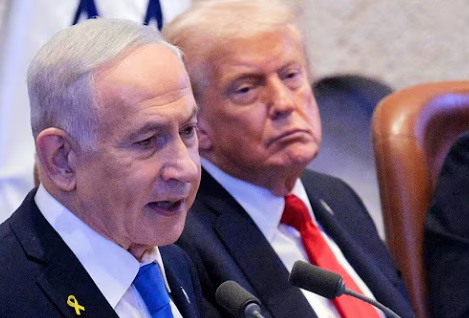
Some say Israel also should have refrained from striking Beirut “while it was so politically sensitive,” Dov Lieber wrote for the Wall Street Journal.
Trump’s deal with Iran “set off alarm bells in Israel, where top officials are wrestling with the consequences of easing the pressure on Teheran and the risks of opening a rift with the U.S. over the war with Hizbullah in Lebanon,” Lieber wrote.
The Israeli strike over the weekend on Beirut nearly derailed the peace agreement.
Trump criticized the strike in an interview with The Wall Street Journal and said on social media that Israel had to stop its attacks across Lebanon.
Israeli Defense Minister Israel Katz said the military would hold its so-called security zone in Lebanon indefinitely, saying it was needed to protect communities in northern Israel. He also said Israel would act independently to stop Iran from getting nuclear weapons if necessary.
“Israel is concerned that Trump has agreed to a deal that could provide Teheran with the financial relief it needs to rebuild its shattered economy but doesn’t include a commitment to turn over its enriched uranium,” Lieber wrote.
Iranian officials have for days said the initial agreement would only serve as a launching point for 60 days of negotiations on Iran’s nuclear program, as well as other deeply entrenched issues, including the future administration of the Strait of Hormuz.
U.S. Vice President JD Vance pointed to falling oil prices in the immediate aftermath of Trump’s peace deal announcement as he touted a “new era” for the Middle East.
“What the president has done is create the real space to transform that region,” Vance told Fox News, adding, “I think we can safely say, with confidence, that Iran will never have a nuclear weapon.”
As for regime chance in Iran, Trump said he “never cared about regime change.”
“This is third group we’ve dealt with… most rational group yet,” the president told the Wall Street Journal.
It is a harsh comedown from Israeli hopes that the war would bring fundamental change to the region by toppling or crippling the Iranian regime and paving the way to diplomatic relations with more of Israel’s Arab regional counterparts under an American security umbrella, said Michael Oren, a former Israeli ambassador to Washington.
Many analysts saw those hopes as unrealistic from the start: Netanyahu is now coming under attack from across the political spectrum from those who say he led the country into a misguided war and mishandled the relationship with the U.S.
“Israelis are deeply disappointed in this outcome, but they should not be surprised,” Daniel Shapiro, a former U.S. deputy assistant secretary of defense for the Middle East, said on social media.
Frez Winner, head of the Israel Defense and Security Forum, said that while the U.S.-Iran agreement isn’t good for Israel, the damage done to Iran by the U.S. and Israel in two wars over the past year has severely weakened Iran both economically and militarily, and left Israel in a much better position than if the wars hadn’t been waged at all.
The deal Trump and Iran have agreed to is a memorandum of understanding aimed at opening Hormuz to maritime traffic, putting in place an extended halt to the fighting, and setting up later talks on the difficult issues of Iran’s nuclear program and sanctions relief.
U.S. officials insist Iran will only receive financial relief in return for concrete progress on American demands.
Avner Golov, a former Israeli national security official, said Trump’s deal risks legitimizing the Iranian regime and surrendering the threat of American force, while allowing Iran to threaten the strait. “It’s not a good starting point for negotiations,” he said.
Israeli officials are also worried that Iran will be able to either draw out the nuclear negotiations indefinitely or get U.S. agreement on a deal that will leave it with the components required to rehabilitate its nuclear program in the future.
Trump told the Journal on Sunday that Israel shouldn’t be concerned:
“Bibi is OK with it,” he said. “Why is it good for Bibi? Iran cannot have a nuclear weapon under any circumstance.”
Iran still is believed to possess tons of enriched material, including enough near-weapons-grade material to fuel almost 11 nuclear weapons. It also has an unknown number of centrifuges used for enriching uranium.
“Trump will do what he thinks is good,” Michael Herzog, a former Israeli military officer and ex-ambassador to the U.S., said Sunday on Army Radio, “whether it’s good or not good for Israel.”
Freedom Rocks! Until It Is Gone

View from Israel: Trump-Netanyahu conflict over Iran deal tied to fall elections added by Editor Two on
View all posts by Editor Two →