
by WorldTribune Staff, January 8, 2026 Real World News
On the streets of Cuba, residents are talking about whether the communist regime in Havana will be next to fall after the U.S. capture of Venezuelan dictator Nicolas Maduro.
Since crucial Venezuelan oil imports are now in jeopardy, some observers say Cuba is on the verge of collapse.
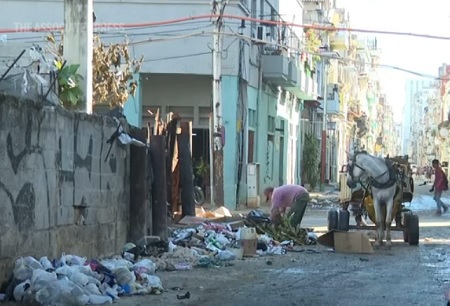
“Elderly Cubans are digging through garbage for scraps of food in Havana,” the Wall Street Journal reported. “In the country’s second city, Santiago, crowds have gathered, blaring music by Cuban exiles such as Gloria Estefan and Willy Chirino, who sings ‘Our day is coming soon.’ ”
Without oil, the Journal noted, “there is a risk that the rolling blackouts, which sometimes leave island residents with only four hours of electricity a day, will worsen. Those who have relied on generators to get by will have a hard time running them without access to fuel. Even cooking will be complicated, as some residents have turned to petroleum-run stoves to cook their food.”
Cubans, particularly those in poorer cities, are openly speculating about whether the U.S. will topple the government of Cuban President Miguel Díaz-Canel, the successor to Raul and Fidel Castro.
“They are nervous,” Manuel Cuesta Morúa, a Havana-based political activist, said of the government. “Repression will increase, it’s the typical response.”
While Cuba’s state security apparatus has held a tight grip on all levels of society since the Castros took power, Maduro’s capture risks upending the government’s control of every street, its deep surveillance system and its vast network of snitches, the Journal cited Cuban dissidents and former officials as saying.
The Journal spoke to 66-year-old Reynaldo Flores, who two days after Maduro’s ouster “was dealing with his fifth consecutive day without running water at his apartment in Havana. It is his new normal, along with the daily blackouts, the failing healthcare system, the trash piled high along the streets, and his aching joints from the mosquito-borne illnesses that have plagued the island.”
Flores said: “Six, seven, 10 days go by with no water. Then when the water returns, there’s no electricity to pump it in.”
Recently, Flores said, there was one day where he simultaneously had no electricity, no running water and no gas to cook with. Like all Cubans, Flores saves water in a tank, rationing it for drinking, cooking, washing and bathing. When it runs out, he jumps from one rooftop to another to gather buckets of water from nearby cisterns.
He worries most about the elderly looking for food in the garbage. When they contract a virus, they go to overwhelmed hospitals to die. All of that without taking into account the stifling heat.
“One of my friends works for the government and was just tasked with picking up elderly people who live alone, who’d been dead in their homes for days,” said Flores, who is retired and relies on remittances from relatives abroad.
More than 2.7 million people—about a quarter of the nation’s population, the majority of them young and ambitious—have fled the island since 2020, most to the U.S. It is “demographic hollowing out,” said Cuban demographer Juan Carlos Albizu-Campos. He estimates Cuba’s population is now eight million.
Tourism, once one of the island’s economic pillars, has plummeted. Hotel occupancy hovers below 30%, according to industry executives. Most tourists, the majority from Russia and China, arrive with all-inclusive packages, meaning that spending doesn’t trickle down to ordinary Cubans as visitors don’t spend much outside their pre-approved itinerary.
A new 42-story luxury hotel towers over the once-elegant Vedado district in Havana, Cuba’s capital. Yet the $200 million, Spanish-run hotel is “nearly empty,” said William LeoGrande, a Cuba analyst at Washington’s American University who recently returned from the country.
He estimates that hard-currency income from tourism is down 75%.
“Many Cubans depend on remittances from family members abroad. The state relies on billions of dollars collected by the government from thousands of Cuban doctors working in Venezuela, Mexico and other countries, and subsidized Venezuelan oil imports, to keep the lights on. But now the Venezuelan oil spigot could be shut off by the U.S.,” the Journal’s report said.
The communist regime’s response to Maduro’s capture was to require workers to attend a rally denouncing the U.S. operation and declare two days of mourning, with flags at half-staff honoring the 32 Cuban soldiers and high-ranking military intelligence officers who died during the U.S. military incursion.
2026 Contract With Our Readers

Meanwhile in Cuba: Regime death watch as services collapse added by Editor Two on
View all posts by Editor Two →