
FPI / January 16, 2026
The U.S. military operation in Venezuela provided China’s spies a rare opportunity to accumulate valuable intelligence on American weapons and war fighting, a former U.S. Air Force space network warfare and signals intelligence (SIGINT) analyst said.
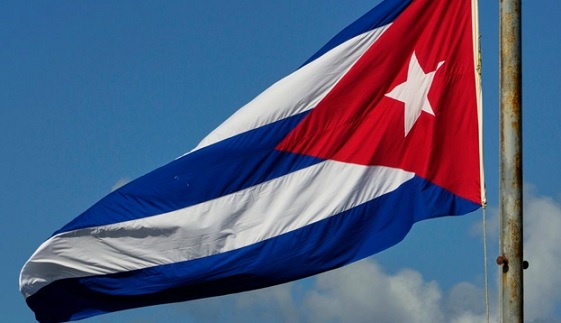
Due to longtime SIGINT posts in Cuba and newer facilities in South America and the Caribbean, “Beijing had a front-row seat to observe the way the U.S. fights — not in theory, not in exercises, but in live conditions, under operational stress, with real command authorities, real data links and real tactical decision-making,” L.J. Eads said.
“From a SIGINT perspective, this is gold,” Eads said.
The Pentagon must in coming months provide to Congress a report on China’s SIGINT collection capabilities in Cuba.
The latest defense policy legislation signed into law last month contains a provision requiring a report from the secretary of defense and director of national intelligence on “intelligence capabilities of the People’s Republic of China and the Russian Federation in the Republic of Cuba.”
Currently, communist China operates SIGINT bases in Cuba which are located near Bejucal and Havana and are successors to the Soviet-era Lourdes intelligence complex that officials said in the past was capable of spying on communications throughout the region and deep into the southern U.S.
“These sites are optimized not for espionage theater but for passive collection: Satellite communications, tactical data links, airborne and maritime command-and-control traffic and timing patterns that reveal far more than content alone ever could,” Eads told security correspondent Bill Gertz for the Washington Times.
As modern warfare is now driven by weapons powered by networks, data links, command processes and communication protocols, the spying during the Venezuela operation likely provided the Chinese military with valuable intelligence on how U.S. forces integrate communications, airborne assets, maritime elements, cyber coordination and coalition interfaces in real time — joint warfare that is a key U.S. military advantage and which China is trying to emulate.
“The broader implication is uncomfortable but unavoidable: Hostile intelligence infrastructure in the Western Hemisphere is no longer a peripheral concern. It is an active, ongoing threat to U.S. war fighting advantage.”
Eads, founder of Data Abyss, said the Trump Administration must counter the Chinese electronic spying by pressing regional states to remove Beijing’s SIGINT and space monitoring bases which pose a major national security threat.
The Chinese facilities throughout the region also support China’s factional orbital bombardment systems, or FOBS, by providing valuable data for future attacks.
A FOBS is a unique, space-based nuclear strike weapon tested by the Chinese military in 2021.
SIGINT stations in Cuba give China key collection sites for spying on military emissions, data critical for designing cyber, electronic warfare, and counterspace attacks on U.S. forces.
“Because of their proximity, Cuban SIGINT sites enable line-of-sight and near-field collection against U.S. airborne [intelligence, surveillance, reconnaissance], maritime task groups, and space-to-ground communications, giving Beijing a level of signal fidelity that cannot be replicated from orbital platforms alone,” Eads said.
The sites are key components of what the military calls China’s “kill-chain” process that feeds data high-tech weapons obtained during U.S. military deployments.
Full Report . . . . Current Edition . . . . Subscription Information

Analyst: U.S. raid in Venezuela provided signal intelligence gold to China via Cuba added by Editor Two on
View all posts by Editor Two →