
by WorldTribune Staff, September 2, 2026 Non-AI Real World News
One result of what top U.S. China watcher Miles Yu terms the “dangerous delusion of quiet diplomacy with China” is a new report by a U.S. Air Force center that found hundreds of U.S. universities, research institutions, and corporations have maintained active research ties and exchanges with Chinese military laboratories over the past decade.
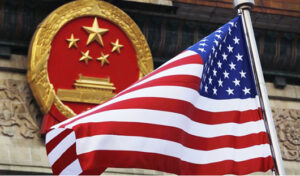
According to the Aug. 25 edition of Geostrategy-Direct.com, Western academic and corporate sectors logged 731 distinct exchanges or contacts between 2015 and 2025 with entities tied directly to the People’s Liberation Army (PLA).
“For more than half a century,” Yu noted, “American statesmen have been told that the most delicate business with the communists who rule China must be conducted quietly. Do not embarrass Beijing. Allow its leaders to ‘save face’.”
Yu, director of the Hudson Institute’s China Center and a former Geostrategy-Direct contributing editor wrote:
Quiet diplomacy survived because it has created its own constituency: a professional class of China brokers whose influence depends on the proposition that Beijing remains one discreet conversation away from moderation.
Wall Street wants market access. Silicon Valley wants customers and supply chains. K Street discovers clients. Universities want Chinese money, students and access. Think tanks acquired programs, consultants and “distinguished fellows.” Former officials and has-been politicians discovered that Beijing could provide something Washington could no longer: relevance.
And yet the results of this lucrative profession have been devastating for U.S. interests, Yu wrote in a essay for Hudson and the Washington Times.
The record of quiet diplomacy should have discredited it long ago. Beijing made solemn promises regarding World Trade Organization obligations and market access, the South China Sea’s non-militarization, Hong Kong’s autonomy, human rights, intellectual property, cyber activities, international norms and more.
Again and again, the promises were broken, evaded or reinterpreted once Beijing secured what it wanted.
The Air Force study found identified more than 500 U.S. organizations that co-authored nearly 2,500 advanced STEM publications alongside PLA military research institutes.
Related: Astounding list of U.S. companies, universities collaborated with PLA research, August 25, 2026
The collaborative research primarily focused on cutting-edge, dual-use scientific sectors — civilian research that Beijing systematically shifts toward modernizing the PLA through its military-civil fusion strategy, including:
• Hypersonic weapons: Propulsion systems and light-alloy net forming breakthroughs directly linked to advanced missile designs.
• Communications: Anti-jamming hardware and secure quantum computing platforms.
• Aerospace systems: Satellite navigation, defense electronics, and advanced materials engineering.
Major U.S. companies linked to the Air Force report on questionable cooperation included Honeywell, Bell Labs, Cisco, IBM, Intel, and Pratt & Whitney, according to Geostrategy-Direct.com.
Harvard University was cited for over 140 co-authored military papers.
Other colleges and universities named included the Massachusetts Institute of Technology, University of California (campuses at Berkeley, Los Angeles, and San Diego), University of Michigan, University of Texas at Austin, Virginia Tech, Penn State University, University of Illinois Urbana-Champaign, and Georgia Tech.
Yu pointed to “one of the strangest features of the U.S.-China relationship: Americans explaining to other Americans why the Chinese Communist Party must not be offended.”
“Beijing hardly needs to lobby Washington directly when prominent Americans do the work for it.”
The pattern is not new, he added:
The habit of self-deception goes back to the opening of China itself. President Nixon and Henry Kissinger achieved an important strategic breakthrough, but they also helped establish a style of personalized, secretive diplomacy in which Beijing enjoyed extraordinary control over the setting, interpretation and information.
In 2026, a reality-based assessment of communist China is overdue, Miles Yu bluntly concluded:
Chinese people are not exotic, premodern creatures who must be protected from embarrassment by enlightened Western custodians. More important, the men ruling Beijing are not Confucian sages nursing ancient sensitivities. They are officials of a Marxist-Leninist party commanding nuclear weapons, intelligence services, propaganda organs and the world’s largest military.
Indeed, explaining CCP behavior as “Chinese culture” gets history backward. Marxism-Leninism is not an ancient Chinese inheritance. It is a radical Western ideology imported into China and imposed through a Leninist party-state.
Treating Leninism as Chinese culture is one of the West’s most persistent — and patronizing — analytical tragedies.
Support Free Press Foundation

Dangerous delusions: ‘China brokers’ have prevailed over serious China watchers added by Editor One on
View all posts by Editor One →