
by WorldTribune Staff, November 16, 2026 — Real World News
Days after he resigned over an affair with a suspected Chinese spy, allies of former Nvidia CEO Jensen Huang have organized a “war room” to lobby for his reinstatement.
Meanwhile, Commerce Secretary Howard Lutnick faces growing accusations of conflicts of interest and failing to block advanced AI chip exports to communist China.
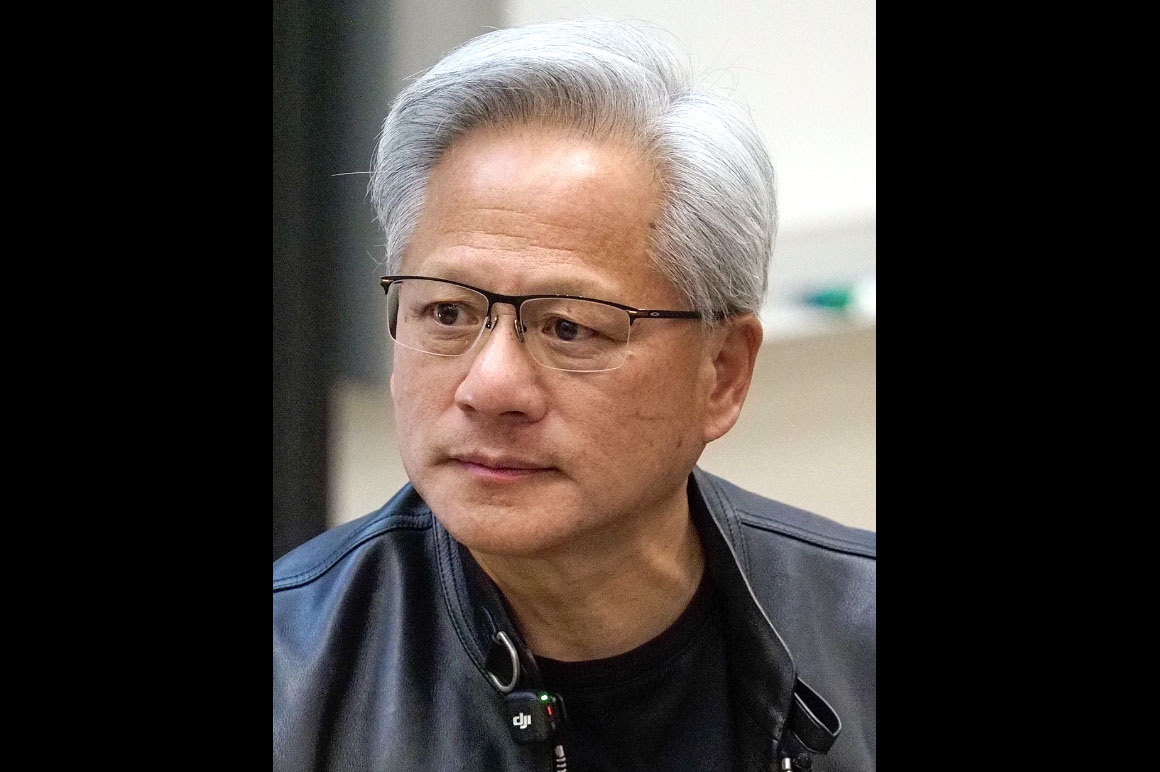
Following Huang’s abrupt resignation on Nov. 12 amid revelations of multiple extramarital affairs — including one with Alice Huang, an executive at Singapore-based firm Megaspeed suspected by U.S. intelligence of espionage — a group of Silicon Valley executives and allies formed a “war room” to lobby Nvidia’s board for his return.
Prominent leaders, including Tesla and SpaceX CEO Elon Musk and Epic Games CEO Tim Sweeney, have signed an open letter and petition exceeding 175,000 signatures demanding Huang’s reinstatement.
Musk argued on X that many of Nvidia’s critical supply chain deals relied on handshake agreements with Huang rather than written contracts.
President Donald Trump stated he is open to Huang returning as CEO, saying he sees no national security risk.
Huang faces steep hurdles on the road to reinstatement: He lacks a controlling stake in Nvidia, the board has already appointed CFO Colette Kress as interim CEO while approaching Arm CEO Rene Haas, and an independent board investigation into his conduct is ongoing.
Treasury Secretary Scott Bessent has strongly opposed Huang’s return, calling for a “dramatic shake-up” with an external leader and giving Nvidia 10 days to explain whether it used shell companies to bypass U.S. export bans.
“Huang built a multibillion-dollar business to feed the ravenous appetite of Chinese customers for American chips, cultivating a network of Asian partners who could serve the Chinese far from Washington. He made a friend of President Trump and lobbied Washington hard to keep the backdoor to China open,” a Nov. 15 Wall Street Journal analysis noted.
Desperate to catch up with the U.S. in AI, China’s developers went to great lengths to get the Nvidia chips, using smuggled chips or accessing them remotely in places like Malaysia.
Nvidia reported $12.4 billion in China revenue in the six months through July 26 of this year, or 7% of its global revenue, and analysts say that countless more billions of dollars ultimately trace back to Chinese customers. By the estimate of Culper Research, the short-selling firm that flagged Nvidia’s China issue in May, more than 20% of Nvidia’s revenues last fiscal year were driven by China.
“Chinese demand is responsible for the massive scale of data centers,” said James Chai, a researcher at Iseas-Yusof Ishak Institute in Singapore.
Records seen by The Wall Street Journal show Megaspeed — the company of the former Nvidia CEO’s onetime mistress, Alice Huang — arranged to send nearly $12 billion worth of top-of-the-line Nvidia chips to companies in China between March 2024 and June 2025. Nvidia says it works to prevent smuggling.
“The shipment records show orders for several hundred thousand chips, the very ones that the U.S. wanted most to keep out of Chinese hands through export controls, though the records don’t show how much of the hardware was actually delivered or where it originated,” the Journal’s analysis said.
Huang’s logic, the analysis continued, was: “Better to keep customers hooked on American tech and keep high-paying jobs at home than give an opening to rival Chinese chip makers such as Huawei Technologies.”
Until 2022, generative AI was mostly a research project and Nvidia chips were mainly designed for videogames. Late in 2022, two developments set the conditions for everything that has followed: The U.S. started barring the export of advanced chips such as Nvidia’s to China, and OpenAI released ChatGPT, setting off a scramble in China to leverage its AI talent pool to catch up.
Then-Commerce Secretary Gina Raimondo crystallized the U.S. policy in December 2023: “We cannot let China get these chips, period,” she said. “We are going to deny them our most cutting-edge technology.”
The Biden-era warning did not frighten the communist regime in Beijing in the least.
“Chinese companies quickly figured out the best two routes — smuggling and remote access — to sidestep that policy. By physically bringing Nvidia chips into China, Chinese AI developers keep their computing power nearby, making it easier to test, train and fine-tune powerful AI models, engineers say,” the Journal noted.
While Megaspeed’s Alice Huang was carrying on an affair with Jensen Huang, her firm sent chips to buyers in China that had years of business ties with local tech companies, the Journal has reported.
To build the most advanced AI models and chase the U.S., Chinese developers say they need Nvidia’s top-of-the-line chips. When using the chips in overseas data centers, they sometimes carry physical hard drives with the training data back to China from Southeast Asia. The data centers can also serve customers outside of China who use Chinese-developed AI.
Alice Huang and her associates leveraged their connections with Jensen to get named as an Nvidia cloud partner, the Journal cited people familiar with the matter as saying.
The Nvidia partnership program was in effect a list of Jensen favorites who got preferred access to scarce AI chips — often by proving they had a big customer lying in wait to use the computing power, say people in the industry. In the case of Megaspeed, that customer was Alibaba, they said.
Momentum in Washington is growing to crack down on the China workarounds.
The Commerce Department is working on rules that would add Malaysia, Indonesia and Singapore to a group of countries subject to export restrictions, people familiar with the matter told the Journal. The rules would require companies exporting powerful chips such as Nvidia’s Blackwell series to those countries to get a license that would prohibit Chinese customers from remotely accessing the computing power.
In a statement, the government of Malaysia said on Nov. 13, it “will not allow itself to be used to get around export controls” and was investigating Megaspeed and its Malaysian affiliate over any possible re-export of AI chips to other countries.
Ryan Fedasiuk of the Foundation for American Innovation, a Washington think tank, said tighter regulation of Nvidia’s sales to data centers that lease computing power to Chinese companies was inevitable. “It’s incumbent on lawmakers in Congress and on the Trump administration to understand what’s going on,” he said.
As for Lutnick, he is facing bipartisan scrutiny from lawmakers and public criticism from Bessent for failing to place Megaspeed on the U.S. trade blacklist.
Bessent stated that the Treasury, State, Pentagon, and U.S. Trade Representative all pushed for restrictions for months, while Lutnick’s Commerce Department — which holds final authority — delayed action despite intelligence warnings.
Critics and lawmakers, including Senate Commerce Committee ranking member Sen. Maria Cantwell, have raised alarms over potential conflicts of interest. Prior to joining the administration, Lutnick led investment bank Cantor Fitzgerald, which held roughly $1.2 billion in Nvidia stock. The firm, now run by Lutnick’s sons, has also arranged billions in financing for Nvidia business partners.
Trump stated he has no plans to replace Lutnick, who is scheduled to testify before the Senate Banking Committee on Dec. 10.
A Commerce official said that Lutnick and Huang don’t have any kind of special relationship beyond the commerce secretary wanting a good rapport with one of the most important U.S. companies.
Freedom Rocks! Until It Is Gone

Huang ‘war room’ plots Nvidia comeback; Lutnick accused of China conflicts added by Editor Two on
View all posts by Editor Two →