
by WorldTribune Staff / 247 Real News November 17, 2026
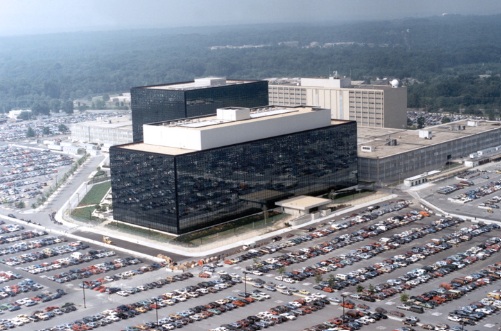
The National Security Agency’s internal classified communications system, known as NSANet, went down on Tuesday.
The agency enacted a “code yellow” status at its Fort Meade, Maryland headquarters and ordered non-emergency personnel to stagger their arrival times.
“This is not a cyber attack,” said Director of National Intelligence Jay Clayton about the wave of Internet-related failures in recent days.
Homeland Security Secretary Markwayne Mullin and other federal officials have emphasized that there is no evidence connecting the FAA, Microsoft, banking, and NSA incidents.
Former NSA officials and cybersecurity experts note that while the timing has fueled online rumors of a coordinated cyberattack, the incidents highlight the fragility of interconnected modern infrastructure.
The NSA disruption is the latest in a series of of high-profile tech failures across critical sectors over the past several days:
• Banking and airline glitches: On Monday, United Airlines experienced a brief operational halt, while thousands of customers faced online banking and Zelle disruptions at major institutions including Chase, Bank of America, and Wells Fargo.
• Compromised commercial websites: Also on Monday, security researchers reported that hackers injected malicious code into roughly 178 major websites—including Zoom, BBC, CNN, and IKEA—via a third-party web experimentation tool called Optimizely to skim credit card data.
• Air travel ground stop: On Friday, the Federal Aviation Administration issued a rare nationwide ground stop for nearly five hours after a telecommunications failure overloaded air traffic control systems.
• Microsoft global disruption: On Thursday, a massive Microsoft 365 outage knocked Outlook, Teams, and Copilot offline for businesses and government offices worldwide.
Sources familiar with the matter told CNN and The New York Times that NSANet had been unstable for weeks and that there are no signs of a cyberattack.
Officials confirmed that backup networks remain intact to transmit urgent intelligence to President Donald Trump during his Asia trip.
“I can tell you with 98% certainty we’re not seeing the cyberattack,” Mullin told Fox News. “We’re not seeing the footprints going in. We’re not seeing the footprints going out. And so, nothing points to it being connected.”
Mullin said the disruptions highlight vulnerabilities in aging infrastructure as newer technologies place demands on legacy systems.
“We just have a lot of technology thrown at us and our world runs on technology now,” Mullin said. “We used to have backup systems and the backup systems are overwhelmed by the new systems now.”
A Reuters report which cited a security researcher, said that a number of the world’s most visited websites, including those belonging to Zoom, HSBC, Equifax, CNN, Salesforce, and IKEA, were subverted in an effort to steal cryptocurrency and infect iPhones.
Malicious JavaScript was aimed at visitors to the websites of 178 organizations across various sectors through Optimizely, a website optimization platform, according to researcher Scott Helme.
The scripts attempted to replace cryptocurrency payment addresses with the attacker’s wallet, skim card numbers as users entered credit card details, steal cookies and screenshots, and plant exploit code on iOS devices.
Helme wrote about the danger of the attack claiming that the hackers had the ability to do almost whatever they wanted. “The only things holding them back are their imagination and their ability to write the [JavaScript] to do what they want to do,” Helme, who also trains people with hacker defense skills, wrote. “The attackers simply chose not to do it.”
Verified attacker transactions show that some crypto was stolen, according to Helme’s research blog. “Most of the malicious code has now been removed,” Helme wrote.
Salesforce said it was investigating unauthorized Optimizely script changes, and had disabled them as a precaution.
Equifax also looked into the issue. It stopped using Optimizely and found no evidence that its systems were compromised.
As the holidays approach, tech analysts say major companies that underpin the entire digital economy are rushing to update their complicated and often outdated computer systems as AI tools come online.
“It’s holiday time, it’s travel time, it’s shopping. So you have all those higher spikes in volume, and more pressure to [update your systems,]” Marva Bailer, CEO of tech advisory firm Qualaix, told the New York Post.
Freedom Rocks! Until It Is Gone

Cyberwar? Outages reported nationwide at National Security Agency, hundreds of major sites added by Editor Two on
View all posts by Editor Two →