
Special to WorldTribune, June 4, 2026 Real World News
Geostrategy-Direct, June 2, 2026
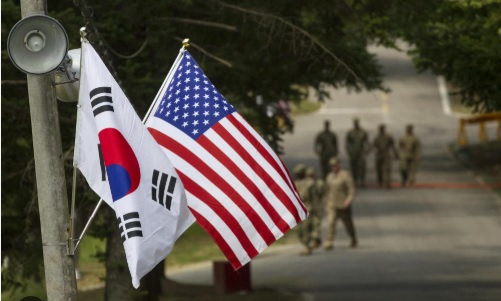
The United States since early April has restricted the sharing of North Korea-related intelligence with South Korea.
The U.S. made the move after South Korean Unification Minister Chung Dong-Young during a parliamentary audit identified “Kusong in North Pyongan Province” as the location of North Korea’s uranium enrichment facility — previously undisclosed by the South Korean and U.S. governments.
The U.S. government raised concerns over a “leak of joint classified information.”
Chung responded that his remarks were based on publicly available information, and the South Korean government attempted to persuade the U.S. to accept this stance.
The Trump Administration, however, maintained its position that the information constituted a leak of classified intelligence and since early April has significantly restricted the sharing of North Korea-related intelligence.
This includes highly sensitive information on North Korea’s weapons-grade highly enriched uranium (HEU) and nuclear development trends, as well as satellite imagery of North Korean nuclear facilities captured by U.S. reconnaissance satellites.
Although Defense Minister Ahn Gyu-Back and First Vice Minister of Foreign Affairs Park Yoon-Ioo visited the U.S. in mid-May and met with U.S. officials, the restrictions on intelligence sharing have persisted.
The government of leftist President Lee Jae-Myung has confirmed that the restrictions are also negatively impacting South Korea’s ability to obtain intelligence on North Korea’s military support to Russia, such as troop deployments and material aid, The Chosun Daily reported on May 29.
Related — Reports: U.S. military withholding nuclear intelligence from South Korean government, April 28, 2026
The U.S. tracks North Korea-Russia military exchanges and material support through its reconnaissance satellites. Given that satellite intelligence on North Korean nuclear facilities is no longer being shared, it is likely that satellite data related to North Korea-Russia cooperation is also subject to restrictions.
According to People Power Party lawmaker Kang Dae-Sik, a member of the National Assembly Defense Committee, the Defense Intelligence Agency recently responded to a request for data on North Korea’s dispatch of personnel to Russia by stating, “There is a lack of intelligence, making evaluation difficult.”
Full Report . . . . Current Edition . . . . Subscription Information

Report: Continued U.S. restrictions on intelligence sharing raises concerns in Seoul added by Editor Two on
View all posts by Editor Two →