
by WorldTribune Staff, January 7, 2026 Real World News
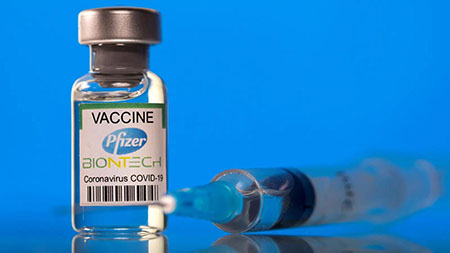
American public health officials have been confident promoting vaccines, including the experimental Covid shots. Why then, would the federal government need to spend hundreds of millions of dollars on campaigns to silence doubt on vaccines?
Investigative journalist Natalie Winters noted in a Jan. 6 Substack.com analysis that Department of Health and Human Services (HHS) grants reveal nearly $350 million in taxpayer funds were spent on vaccine promotion campaigns to combat “misinformation” and “vaccine hesitancy.”
 “Many of these grants – which cover 40 states and 7 territories – focus on promoting vaccine use among children,” Winters wrote. “Despite HHS removing the Hepatitis B vaccine from the children’s immunization schedule, million-dollar grants have gone towards promoting this vaccine in children.
“In plain terms: public money is being used to change what Americans think. Skepticism itself is treated as a public health threat.”
Winters’ investigation found that 54 grants totaling $338.36 million began on July 1, 2025 and are scheduled to run through June 30, 2030.
“A major share of the funding focuses on child vaccination campaigns, including school-linked outreach and parent-directed messaging,” Winters wrote. “Even more striking: several programs explicitly promote Hepatitis B vaccines for children, pouring millions into awareness and compliance campaigns.”
Some grants are explicit: “increased access to vaccines for eligible children.”
Winter’s investigation found that the federal spending to fight “misinformation” and “vaccine hesitancy” includes:
• One state is seeking to do the following: “Increase vaccine access. Improve vaccination equity. Promote vaccine confidence and demand. […] Enhance vaccination response readiness.”
• In North Dakota, health officials are seeking to “improve vaccine confidence amongst North Dakotans of all ages. This initiative is designed to harness evidence-based strategies and foster impactful partnerships.”
• In Kentucky, health officials are setting out to combat vaccine “misinformation”: “Important work remains to improve vaccination confidence, demand, and access across the lifespan. Although children’s access to vaccines has improved overall in Kentucky, challenges persist among adolescent and adult populations, as evidenced by immunization rates that remain below the national average. Many of these challenges are fueled by the public’s lack of trust in vaccines, which is further compounded by misinformation campaigns provided from a variety of readily available sources.”
• Other states are using a similar approach: “Improving vaccination equity using data to identify populations of focus, implement strategies, and evaluate interventions. Promoting vaccine confidence and demand through partnerships with trusted messengers, disseminating inclusive and accessible education materials, and quelling mis- and disinformation surrounding vaccines.”
• Some states are pursuing “strategic partnerships” with “healthcare providers, pharmacies, community vaccinators, and educational institutions”: “Additionally, targeted efforts will be made to address vaccine disparities in underserved communities, including Amish populations and Native American tribes, by working with trusted healthcare partners. The program will employ evidence-based approaches to improve vaccination rates, including reminder recall campaigns, provider assessment reports, and public awareness initiatives. Through strategic partnerships with healthcare providers, pharmacies, community vaccinators, and educational institutions, IDOH aims to increase vaccine access points and ensure compliance with immunization requirements.”
Winters noted: “Governments have always promoted vaccines. What’s new is the scale—and the premise. Nearly $350 million is being spent not on medicine, but on persuasion. Not on care, but on compliance. Not on transparency, but on messaging—much of it aimed at children.”
2026 Contract With Our Readers

Report: Feds spend hundreds of millions to silence doubt on vaccines added by Editor Two on
View all posts by Editor Two →