
by WorldTribune Staff, August 28, 2026 Non-AI Real World News
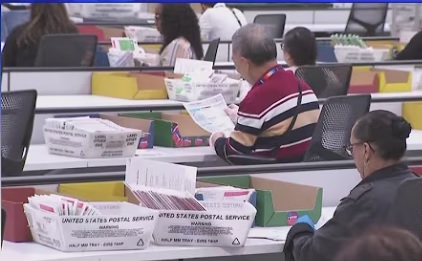
While Congress split for summer vacation without addressing election integrity, a Massachusetts judge appears to be working overtime to thwart President Donald Trump’s executive order which directed the Postal Service to apply restrictions to mail-in voting.
U.S. District Judge Indira Talwani on Thursday issued a temporary restraining order blocking core parts of Trump’s order which seeks to ensure that only U.S. citizens receive and cast ballots.
The temporary restraining order is in effect for 14 days.
Talwani’s order was issued in response to two lawsuits. One was filed by a coalition of 23 states, the District of Columbia, and Pennsylvania Gov. Josh Shapiro. The second lawsuit was filed by multiple organizations, including the League of Women Voters of Massachusetts.
An Aug. 24 ruling by the U.S. Supreme Court led to the lifting of earlier injunctions issued by Talwani which blocked Trump’s directive.
Related: Judge Indira Talwani fought the law and the law won, August 27, 2026
In her order, Talwani said that the Postal Service’s final rule imposes multiple requirements on states, including complying with envelope design requirements, securing USPS approval for ballot envelope and return envelope designs, and inputting voter information into a USPS-run electronic portal.
“USPS’s interest in correcting an unsubstantiated problem through likely unconstitutional means is dwarfed by the overwhelming risk of pervasive disenfranchisement of citizens who need access to mail ballots in order to vote,” the judge wrote. “The balance of harms and public interest warrants a [temporary restraining order].”
In the order he issued in March of this year, Trump wrote that the federal government has a duty to maintain public confidence in election outcomes and that additional measures are needed to enhance election integrity through U.S. mail:
“Secure ballot envelope identifiers provide a reliable, auditable mechanism to enforce Federal law without unduly burdening or infringing on the rights of eligible voters. Unique ballot envelope identifiers, such as bar codes, enable confirmation that only citizens receive and cast ballots, reducing the risk of fraud and protecting the integrity of Federal elections.”
Under the rule, states must supply lists of mail ballot recipients, and all outbound and return ballot envelopes must bear unique barcodes. The Postal Service, under the rule, may refuse to deliver ballots that do not comply with the new standards or are associated with voters who do not appear on the lists.
USPS Postmaster General David Steiner defended the rule, arguing that the Postal Service is simply “[matching] the ballots that a state believes they’re sending out to what actually gets sent out.”
“To me, it’s not a political question; it’s a question of how do we most efficiently and securely move ballots,” Steiner said as he testified before the Senate Homeland Security and Governmental Affairs Committee about the proposed rule. “We’ve been recommending this for many years; all this does is make it a requirement.”
250 Years of Freedom Is At Risk

Unlike Congress, Judge Talwani takes no August break in fight over mail-in voting added by Editor Two on
View all posts by Editor Two →