
by WorldTribune Staff, February 5, 2026 Real World News
The U.S. State Department on Wednesday brought together representatives from 54 nations in what the department described as an all-out effort to “set out to reshape the global market for critical minerals and rare earths.” Multiple bilateral critical minerals frameworks and memorandums of understanding (MOUs) were signed.
“Critical minerals and rare earths are essential for our most advanced technologies and will only become more important as AI, robotics, batteries, and autonomous devices transform our economies,” the State Department said in a press release.
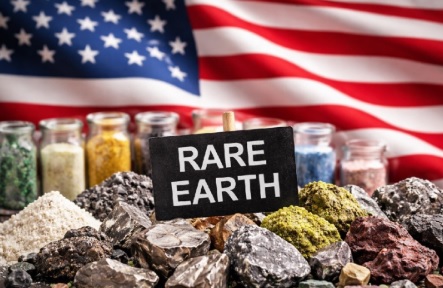 “Today, this market is highly concentrated, leaving it a tool of political coercion and supply chain disruption, putting our core interests at risk. We will build new sources of supply, foster secure and reliable transport and logistics networks, and transform the global market into one that is secure, diversified, and resilient, end-to-end.”
China dominates the global rare earth mineral industry by controlling roughly 60% of mining, 90% of refining, and over 90% of permanent magnet manufacturing.
On Feb. 2, President Donald Trump announced Project Vault, a landmark initiative led by the Chairman of the Export-Import Bank of the United States (EXIM), which the State Department said “marks an unprecedented step in U.S. industrial policy by establishing a domestic strategic reserve for critical minerals.”
The EXIM Board of Directors approved a Direct Loan of up to $10 billion for Project Vault, more than double the largest financing in EXIM’s history, which the State Department said is “designed to shield domestic manufacturers from supply shocks, expand U.S. production and processing of critical raw materials, and fundamentally strengthen America’s critical minerals sector.”
Secretary of State Marco Rubio, joined by Vice President JD Vance, Treasury Secretary Scott Bessent, Interior Secretary Doug Burgum, Energy Secretary Chris Wright, and U.S. Trade Representative Ambassador Jamieson Greer, hosted representatives of 54 countries and the European Commission on Wednesday, including 43 foreign and other ministers, at the 2026 Critical Minerals Ministerial.
Delegations from the following countries attended: Angola, Argentina, Armenia, Australia, Bahrain, Belgium, Bolivia, Brazil, Canada, Cook Islands, the Czech Republic, the Democratic Republic of the Congo, the Dominican Republic, Ecuador, Estonia, the European Commission, Finland, France, Germany, Greece, Guinea, India, Israel, Italy, Japan, Jordan, Kazakhstan, Kenya, Lithuania, Malaysia, Mexico, Mongolia, Morocco, New Zealand, Norway, Oman, Pakistan, Paraguay, Peru, Philippines, Poland, Qatar, the Republic of Korea, Romania, Saudi Arabia, Sierra Leone, Singapore, Sweden, Thailand, the Netherlands, Ukraine, the United Arab Emirates, the United Kingdom, Uzbekistan, and Zambia.
The State Department said the Trump Administration “signed new bilateral critical minerals frameworks and memorandums of understanding (MOUs), announced U.S. government financing opportunities to support strategic minerals projects, and celebrated the launch of the Forum on Resource Geostrategic Engagement (FORGE). These efforts are complemented by our collaboration between the United States and its nine Pax Silica partners to secure strategic stacks of the global technology supply chain.”
The United States on Wednesday signed new bilateral critical minerals frameworks or MOUs with Argentina, the Cook Islands, Ecuador, Guinea, Morocco, Paraguay, Peru, the Philippines, the United Arab Emirates, the United Kingdom, and Uzbekistan.
The State Department added:
“Recognizing that governments alone cannot solve this problem, we are committed to close partnership with the private sector, including through Pax Silica, which will lead through investments in mining, refining and processing, end use applications, and recycling and reprocessing. On February 3, the day before the ministerial, we brought leading lights in the private sector together with governments from around the world to discuss supply chain challenges and investment opportunities.
“That day, Deputy Secretary Landau witnessed the signing of an MOU between Glencore and the U.S.-backed Orion Critical Mineral Consortium in relation to a potential acquisition of assets in the Democratic Republic of the Congo (DRC). This MOU reflects the core objectives of the U.S.-DRC Strategic Partnership Agreement by encouraging greater U.S. investment in the DRC’s mining sector and promoting secure, reliable, and mutually beneficial flows of copper and cobalt to the United States from the DRC.
“Following the ministerial on February 4, Deputy Secretary Landau and Under Secretary Helberg convened a task force of mining industry leaders to advance priority projects in the framework of new collaboration with the United States and its partners.”
2026 Contract With Our Readers

White House convenes 54 nations to counter China’s rare earths dominance added by Editor Two on
View all posts by Editor Two →