
Analysis by WorldTribune Staff, June 7, 2026 Non-AI Real World News
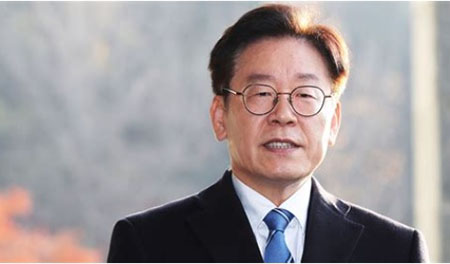
It took a column in the Wall Street Journal by respected analyst Nicholas Eberstadt and Lawrence Peck for the reality of the Seoul government’s drift away from an anti-communist and pro-USA foreign policy consensus to finally be acknowledged by major media’s virtual reality.
In a June 1 analysis titled “South Korea Takes a Hard Left Turn Against America,” Eberstadt and Peck note:
South Korean officials storm the command center of an American military base, seizing details about U.S. Air Force flights in the name of a domestic investigation.
South Korean legislators and prosecutors launch a criminal inquiry into a successful American company (Coupang, sometimes called the Amazon of Asia) for a seemingly accidental data breach, while local Korean (and Chinese) firms skate by for more-serious, deliberate disclosures.
A South Korean government minister publicly discloses what is alleged to be classified information about a North Korean nuclear site, effectively revealing to Pyongyang intelligence that America had shared with Seoul in confidence.
Welcome to today’s U.S.-South Korea alliance. The partnership is grappling with the unpredictable Trump administration—and also the all-too-predictable recklessness of the hard-left government in Seoul. Mr. Trump’s transactional, often peremptory approach to American allies is well-known. But the government on the other side of the alliance deserves much more attention.
The radicals in charge of South Korea today are President Lee Jae Myung and his Minju (or “Democratic”) Party. They swept to victory last June, after the disgraced former president, Yoon Suk Yeol, was impeached for a bizarre six-hour attempt to declare martial law.
South Korean journalists and foreign reporters often refer to Mr. Lee and Minju as “liberals” (and to Mr. Yoon as a “conservative”). But Minju’s far-left leaders tend to despise liberals. Critics fear their ultimate aim is to impose far-reaching legal revisions to permit their own indefinite rule—and that the country’s hard-won liberal constitution is at risk.
How far left is Minju? In 2021 it joined the celebration of the 100th anniversary of the Chinese Communist Party in Beijing. Minju raised its party banner alongside the flags of the Chinese and other communist and authoritarian parties.
The Wall Street Journal’s analysis drew the attention of South Korea’s largest daily newspaper and the U.S. Congress.
The Chosun Daily noted that “the authors directly addressed not only the Lee Jae-Myung government’s policies toward North Korea and China but also the handling of the president’s personal legal risks. Notably, they drew attention by linking the administration’s apparent attempts to neutralize the trial related to the inter-Korean remittance case to the possibility of long-term rule.”
Lee faces several ongoing criminal trials and legal challenges, primarily stemming from his tenure as mayor of Seongnam and governor of Gyeonggi Province.
The leftist president was indicted for allegedly making false statements and denying connections to a key figure involved in a land development scandal during his 2022 presidential campaign. Following a series of complex court rulings—including a suspended prison sentence, an overturned appeal, and Supreme Court rulings—courts have continued to weigh whether these statements violated the Public Official Election Act.
Prosecutors allege that during his time as mayor of Seongnam, Lee provided unlawful favors to private investors in two major urban development projects. He is accused of allowing developers to gain massive illegal proceeds while causing the city government to suffer financial damages.
The Chosun Daily wrote: “This issue had already burdened the ruling party in the June 3 local elections. Now, with U.S. interest growing, it cannot be dismissed lightly. Indeed, during a U.S. congressional hearing on the 3rd, Republican Rep. Darrell Issa (California) requested that the (Wall Street Journal) column be included in the official record. Cheong Wa Dae’s decision to publish a rebuttal column under the name of Senior Secretary for Overseas Media Affairs Choi Sung-a paradoxically confirms that the original column garnered significant attention in the U.S.”
Lee is constitutionally constrained to a single five-year term. At least for now, as Eberstadt and Peck point out:
South Korea’s constitution stipulates the presidency is a one-term job. Mr. Lee has proposed amending that provision. He can’t amend the constitution without a two-thirds legislative supermajority, and he lacks one—barely. But he hope the voters give him that supermajority in the 2028 National Assembly elections. If that doesn’t work, there is always lawfare.
At some point, the US administration is going to have to face up to the reality of South Korea’s far-left government. ‘Far-left’ in this case is well beyond ‘liberal’, but is, in fact, pro-PRC, pro-NK, and anti-US. @Honesttruthman https://t.co/soFqzkMH9G
— Grant Newsham (@NewshamGrant) June 3, 2026
2026 Contract With Our Readers

Reality of ‘hard left government’ in Seoul finally acknowledged by legacy media, East and West added by Editor Two on
View all posts by Editor Two →