
by WorldTribune Staff, October 21, 2026 — Real World News
Large banks, including Bank of America, abruptly shut down the accounts of lawful American conservatives while at the same time allowing lawless activity linked to the Chinese Communist Party (CCP) and drug cartels to go unreported for years, the U.S. Treasury Department said.
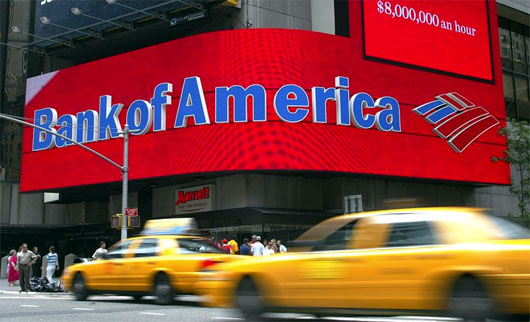
Treasury announced it fined Bank of America $1.21 billion for anti-money laundering and sanctions violations. Regulators stated the bank failed to report over $5 billion in suspicious transactions, including networks linked to Chinese money laundering and southwest border cartels, alongside 475 sanctions infractions.
 Treasury Secretary Scott Bessent stated: “When a bank of this size fails to meet its anti-money laundering and sanctions obligations, the consequences extend far beyond its own walls, exposing the entire U.S. financial system to significant illicit finance risks.”
The infractions occurred between 2018 and 2025, according to the Treasury Department and include:
• The Financial Crimes Enforcement Network and the Office of the Comptroller of the Currency assessed $1.2 billion and $750 million (credited within the total) for deficient Bank Secrecy Act and anti-money laundering controls, marking the largest fine in OCC history.
• Bank of America settled for $11.6 million with the Office of Foreign Assets Control regarding 475 apparent violations tied to Iran, Russia, narcotics, and global terrorism.
• Regulators reported that the bank omitted over $5 billion in suspicious activity, with more than $1 billion directly involving high-priority national security and illicit finance risks.
The Federalist’s Helen Raleigh noted: “The fine imposed on BoA is part of the U.S. Treasury’s broader effort to combat Chinese money-laundering networks, which have emerged as a principal channel for moving proceeds generated by Mexican cartels, including those trafficking fentanyl.
“These networks typically pair U.S. cash from drug sales with Chinese clients seeking to transfer funds abroad despite Beijing’s capital controls, which generally limit individuals to $50,000 per year. A cartel-linked broker receives the dollars in the United States and, using WeChat, matches them with a Chinese customer. The customer then sends the equivalent amount in yuan, plus a fee, into an account controlled by the network inside China.
“In exchange, the customer or a relative gains access to the corresponding U.S. dollars already sitting at an American bank. The yuan that remains in China can be used to purchase fentanyl precursor chemicals or Chinese-made goods that are shipped to Mexico, sold, and converted into funds for the cartels. Former Justice Department official Craig Timm has described these networks as one of the principal global methods for laundering illicit funds.”
Related: Unreported: Major banks shut down accounts of groups targeted by Team Biden, October 14, 2026
As part of the settlement, Bank of America admitted that it “willfully violated” the Bank Secrecy Act by failing to maintain a compliant anti-money laundering program, conduct required due diligence on foreign correspondent accounts and file suspicious activity reports, the Treasury Department said.
Meanwhile, a recent OCC review found that several major U.S. financial institutions restricted or terminated relationships with conservative organizations, religious groups, and certain lawful businesses based on political or religious views.
In one instance, TD Bank raised objections to a pandemic-relief loan for a nonprofit after the leftist Southern Poverty Law Center labeled the group a “hate group” because of its stance on immigration. The organization later withdrew the application.
Bank of America ended relationships with private-prison and detention-center customers during the Biden Administration, citing reputational risk tied to shifting policy attitudes, only to seek re-engagement with a similar customer months into the subsequent administration — an episode the OCC characterized as political “whipsaw.”
Separately, an FBI whistleblower has stated that, after Jan. 6, 2021, Bank of America supplied the bureau with a list of customers who had used its cards in the Washington, DC area around that date. Despite having undergone no legal process, the bank maintained the step was consistent with its Bank Secrecy Act obligations.
Raleigh noted: “The contrast is difficult to ignore and points to a consistent misallocation of compliance attention. Large banks applied scrutiny to politically disfavored but lawful customers while permitting substantial volumes of activity linked to fentanyl proceeds and other illicit networks to go unreported for years. When institutions of this size treat viewpoint-based reputational concerns as higher-priority risks than sophisticated money-laundering channels that move billions for cartels, the outcome is more than a compliance failure. It misallocates resources and leaves the financial system more vulnerable to economic and national security threats that will ultimately affect all of us.”
Freedom Rocks! Until It Is Gone

Treasury: Bank of American [that closed conservatives’ accounts] tolerated money laundering by CCP, cartels added by Editor Two on
View all posts by Editor Two →