
Analysis by WorldTribune Staff, November 13, 2026 — Real World News
Geopolitical analysts argue that the Chinese Communist Party’s (CCP) rise has been widely misunderstood by Western observers, who often projected their own assumptions onto China rather than seeing the regime’s true ideological and tactical nature.
“The greatest triumph of Chinese communism is persuading the capitalist world to finance its rise while dismissing its ideological ambitions. The greatest failure of the free world is believing it has changed the CCP when the CCP has simply learned how to exploit and change the free world,” Miles Yu wrote in a Nov. 10 analysis for The Washington Times.
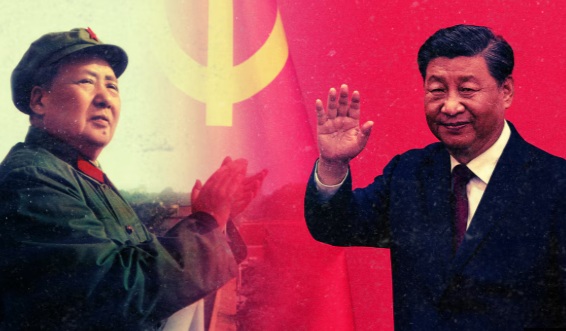
“Nowhere was communism’s human toll more devastating than in China. Mao Zedong’s Great Leap Forward killed tens of millions through a man-made famine, and the Cultural Revolution devastated an entire generation,” Yu noted.
While the CCP acknowledges the Mao era as a mistake, it restricts independent academic research, public memorials, and open media discussion about the period. Critics note this allows the state to preserve the foundational legitimacy of Mao Zedong and single-party rule while focusing public attention on modern national rejuvenation and economic prosperity.
Once China embraced market mechanisms, Western analysts frequently dismissed the CCP’s Marxist-Leninist ideology as dead or purely symbolic. In reality, the communists used capitalist tools to strengthen state power, merging nationalism with Leninist political control.
“This misreading became the intellectual foundation of one of America’s greatest strategic blunders,” Yu wrote.
“Washington and its allies opened their markets, transferred technology, encouraged investment and welcomed communist China into the global free trade system. They assumed that capitalism would dissolve communist dictatorship and prosperity would produce political freedom.
Related — ‘Honey trap’ coup in the USA: Nvidia’s pro-China CEO lobbied Trump on chip export policy, November 12, 2026
“President Clinton gave this fantasy its most memorable expression in his March 2000 speech at Johns Hopkins University’s School of Advanced International Studies: ‘I believe the choice between economic rights and human rights, between economic security and national security, is a false one.’ ”
More recently, Yu wrote, “the Chinese Communist Party’s censorship, secrecy and coercive pandemic policies compounded the Covid-19 catastrophe, leading to more than 15 million deaths worldwide. These disasters shared a pathology: Ideological certainty supersedes reality, and CCP infallibility matters more than human life.”
Today, China is routinely described as the world’s second-largest economy.
“Far more consequential is its position as the world’s most powerful communist dictatorship, ruled by a Leninist organization of more than 100 million members,” Yu wrote. “Its apparatus penetrates the military, government, universities, corporations and virtually every corner of Chinese society.”
Xi Jinping’s regime in Beijing “is poised to export its model of communist governance worldwide through economic dependency, military intimidation, technological dominance and political influence, all of which have become powerful instruments of communist expansion,” Yu added.
The ideological continuity from Mao to Xi remains unmistakable.
“Xi has revived ideological indoctrination, tightened party discipline and deployed artificial intelligence and advanced surveillance technologies to enforce conformity. Mao’s obsession with controlling thought and society now operates through 21st-century technology,” Yu wrote.
“Yet Western elites continue describing Beijing through the fashionable vocabulary of great-power competition and the Thucydides Trap, treating China as another rising nationalist power demanding its rightful place in the international order.
“Such explanations obscure the CCP’s Marxist-Leninist identity. Its doctrine of perpetual struggle, reinforced by Sino-centric civilizational superiority, guides its efforts to reshape international institutions, technological standards and political norms.”
The White House proclamation of Nov. 1 through 7 as Anti-Communism Week — marking the 109th anniversary of the Bolshevik Revolution — was essentially drowned out by the midterm elections.
“Anti-Communism Week calls for recovering the ideological clarity that sustained the free world through the Cold War. The lesson is especially urgent because the communist threat has grown more sophisticated, technologically advanced and embedded in the global economy,” Yu wrote.
250 Years of Freedom Is At Risk

Triumph of Chinese communism: Blinding the West to reality added by Editor Two on
View all posts by Editor Two →