
by WorldTribune Staff, August 20, 2026 Non-AI Real World News
The U.S. military has established a covert shipping route in the Strait of Hormuz that has successfully guided more than 1,000 commercial vessels through the vital waterway since July, U.S. Central Command (CENCTOM) said.
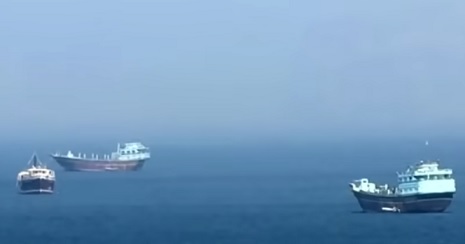
While Iran claims the strait is closed, U.S. military officials maintain they are effectively in control of the southern lane to keep global energy prices stabilized.
Tankers are guided through a southern channel hugging the coast of Oman, bypassing the more dangerous Iranian-controlled side of the strait, according to reports by Axios and The New York Times.
CENTCOM said that convoys of between 15 and 20 tankers are entering and exiting the strait every night.
The operation has successfully restored roughly 10 million barrels of oil per day to the global market, which represents about half of the pre-war volume.
The U.S. Navy and Air Force provide full defensive coverage, utilizing warships, aerial drones, and fighter jets to shoot down blind-launched Iranian cruise missiles and drones.
The operation became viable after a concentrated CENTCOM campaign heavily degraded Iran’s maritime surveillance and radar capabilities in the area.
A specialized task force operating out of the U.S. Army’s 82nd Airborne Division headquarters at Fort Bragg, North Carolina, actively manages the daily manifests and logistics of the operation.
“They have been extraordinarily effective in keeping that southern corridor operating, despite the attacks,” Windward shipping analyst Michelle Wiese Bockmann told the Times.
At least 15 ships using the southern routes have been hit by Iranian attacks since the beginning of June, according to a New York Times analysis of International Maritime Organization data.
Those attacks injured 16 mariners and killed two, the outlet reported.
A separate vessel was struck near Oman this week, killing a crew member, according to the United Kingdom Maritime Trade Operations, which is administered by Britain’s Royal Navy.
Two tankers operated by Greek shipping company Dynacom were hit on July 19, with one eventually abandoned, according to the International Maritime Organization.
250 Years of Freedom Is At Risk

Stealth operation by CENTCOM has guided an estimated 1,000 tankers through Strait of Hormuz added by Editor Two on
View all posts by Editor Two →