
by WorldTribune Staff, July 10, 2026 Non-AI Real World News
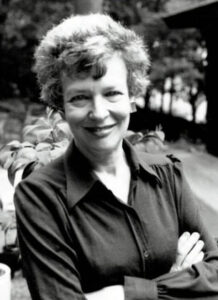
Rael Jean Isaac, an influential American intellectual and a founder of Americans for a Safe Israel died in New York on June 25. She was 93 years old.
In 1983, Isaac co-authored with her husband Erich Isaac “The Coercive Utopians” which focused on the emergence of a “new class” that had turned against America and no longer appreciated the freedoms it offered.
The title referred to a term borrowed from scientist-journalist Peter Metzger. It described a new elite entrenched in mainline churches, environmental and peace movements, universities and radical think tanks.
What made them “coercive,” the Isaacs wrote, was that “in their zeal for attaining an ideal order,” they sought to “impose their blueprints in ways that go beyond legitimate persuasion.”
Earlier in 1980, her articles played a key role in exposing the subversive, East Coast forces opposing the election of Ronald Reagan.
In a 1980 article for Midstream, “The Institute for Policy Studies: Empire on the Left,” Isaac exposed the activities of a prominent Washington, D.C.-based think tank — the Institute for Policy Studies, or IPS:
“The fellows at IPS believed that America was an evil, violent and racist society bent on world hegemony. Third World terrorists and revolutionary movements could do no wrong. Their writings consistently portrayed the United States as the aggressor in U.S.-Soviet relations as they worked to undercut relations between Washington and its allies, including Israel. Naturally, they supported the PLO.”
According to an article in the New York Tribune about “The Spike” by the late journalist Arnaud de Borchgrave:
The book also focused attention on Institute for Policy Studies (IPS), the radical character of which has consistently been played down by such publications as the New York Times, which has described it as one of the three major private policy institutions in Washington (in the same class as the Brookings Institute and the American Enterprise Institute).
But in a devastating article appearing in Midstream, Dr. Rael Jean Isaac charged that the “IPS can fairly be described as an enormous intelligence operation practicing both covert action and subversion.”
“It is itself an adaptation of the multinational corporation, and serves as an ‘imperial’ nerve center,” she wrote.
Described by the Jerusalem News Service (JNS) as “a prescient author,” Isaac wrote half a dozen public policy books and hundreds of articles for periodicals, such as Reader’s Digest, The American Spectator, Atlantic, Midstream, Commentary and The New Republic.
In 1970, she co-founded, together with her husband, Erich, and former Knesset member Shmuel Katz, Americans for A Safe Israel (AFSI).
With the announcement of the 1993 Oslo Accords, AFSI stood virtually alone against the euphoric belief sweeping the Jewish world that peace was at hand.
A more light-hearted AFSI project, but one that brought Isaac great satisfaction, was “Shimon Says,” a 1996 collection of the pontifications of Israeli politician Shimon Peres, whose book The New Middle East, Isaac described as “terrifying proof that Israel’s foreign policy is directed by a man totally out of touch with reality.”
Isaac wrote on many topics besides Israel — from the homeless mentally ill to global warming to the persecution of small American farmers by the Legal Services Corporation. She also wrote about cultural phenomena, such as the child sex-abuse craze of the 1980s, in which children accused their parents or day-care center owners of horrific acts based on “repressed” (i.e., invented) memories, on whose basis many innocent people were sent to prison for decades.
In 1983, Isaac wrote a Reader’s Digest article on the National Council of Churches (NCC), an umbrella group of various church denominations, titled “Do You Know Where Your Church Offerings Go?”
Radicals had overtaken the NCC. Fearing the exposé would damage them, they tried unsuccessfully to stop the article’s publication. The group worried, rightly, that lay churchgoers would react with disbelief if they knew that their offerings were going to fund revolutionary movements in the United States and abroad.
Isaac’s article became the second most-requested reprint in Reader’s Digest history, with more than 150,000 requests. Four weeks after it appeared, CBS’s “60 Minutes” ran a two-part series on the subject.
Two other books that Isaac spoke proudly of — not because they had an impact, but because they were prescient — were Israel Divided: Ideological Politics in the Jewish State and Roosters of the Apocalypse: How the Junk Science of Global Warming Nearly Bankrupted the Western World.
In Roosters of the Apocalypse, Isaac posited that the “climate change” movement wasn’t scientific at all, but rather an apocalyptic millenarian movement.
In 2012, the time of publication, only a handful of conservatives spoke out against global warming, among them, The Heartland Institute, which published the book. Isaac later said the Russia-Ukraine war did more than anything to shift the conversation. Europeans now talk less about zero emissions and more about dependence on Russian oil and gas.
Isaac cooperated on many projects with her husband Erich, a professor of geography at the City College of New York.
Isaac considered her best book, Madness in the Streets: How Psychiatry and the Law Abandoned the Mentally Ill. She co-wrote it with Virginia Armat, her former editor at Reader’s Digest.
It identified the “social and political delusions” that led to the abandonment of the mentally ill, as misguided notions that mental illness didn’t really exist became the fashion.
The book highlighted the key role of the law in fomenting the disaster. Young lawyers who saw themselves fighting for the oppressed, yet who tended to know very little about mental illness, adopted a 1960s-style civil-rights approach to such social problems. In “liberating” the mentally ill from state mental hospitals (which were incompatible with the principles of a free society, they claimed), they, along with misguided politicians and medical health theorists, prevented them from gaining access to effective treatment.
In her later years, Isaac warned of the demise of American Jewry. Writing in The Algemeiner in 2015, she predicted a rise in antisemitism, physical attacks on Jews and universities becoming unwelcoming for Jewish students.
She bemoaned the fact that Jews were helping bring Muslims, many of whom are taught contempt for Jews from an early age, into the United States.
“Jews, in their time-honored pattern of countering their own most basic interests, are in the forefront of celebrating — and urging on — their self-destruction,” she wrote.
In her final days, she told her children, “I’m glad I won’t be alive to see what’s coming.”
Isaac was predeceased by her husband, who died in 2021, also at the age of 93. She is survived by their sons, Gamaliel, Gideon, Raphael and David; five grandchildren; and four great-grandchildren.
This article includes excerpts from an obituary for JNS written by the son of Rael Jean Isaac, David Isaac, a member of the Editorial Advisory Board for Free Press Foundation.
250 Years of Freedom Is At Risk

Rael Jean Isaac, 93, author of ‘Coercive Utopians’ added by Editor One on
View all posts by Editor One →